Opening Blast: Hashim, Meteorites, and the Cosmic Joke
You’ve probably seen it by now — a Facebook post, a viral reel, maybe a meme that flew past your eyes while you were doomscrolling.
Hashim Al-Ghaili, our favorite science-pop alchemist, drops a bomb: scientists have finally found all five DNA and RNA bases — adenine, guanine, cytosine, thymine, and uracil — in meteorites.
Not just a hint, not just a rumor, but the entire genetic alphabet, scattered in cosmic gravel that crash-landed on Earth. This isn’t ancient aliens on the History Channel or YouTube rabbit holes—this is Nature Communications, peer-reviewed, lab-coat territory.
And here’s the punchline: the building blocks of life as we know it aren’t a local recipe. They’re imported.
You’d think a revelation like that would hit with the force of a meteor. Newsrooms pausing mid-sentence. Teachers rewriting textbooks. Politicians sweating under the klieg lights of “what now?”
Instead, what do we get? A collective shrug. A bored flick of the thumb. The kind of world-shifting news that, in a sane society, would trigger a round of “what does it mean?” instead triggers… nothing. Maybe a few reposts, a round of side-eye from the fact-checkers, and then everyone is back to debating gas prices or AI-generated pop songs.
Why does this not blow the doors off mainstream thinking? Because stories are stubborn. Nations, religions, institutions—they’re built on bedrock narratives of being chosen, exceptional, the only act in town.
Too many salaries, too many doctrines, too many election campaigns riding on the myth of specialness. So what happens when reality drops a bomb like this? The authorities treat new evidence like an inconvenient fart at Sunday dinner: everyone notices, nobody comments, and then it’s back to the hymn sheet.
Except now, the hymn sheet’s been printed on meteorite fragments.
But let’s not lose the thread. The joke isn’t on science. The joke is on the part of us that pretends to want answers, but really just wants the comfort of the old refrain — preferably sung in the key of local, Earth-born certainty.
Hashim’s post is just the latest round of cosmic comedy: the universe hands us the script, and we keep missing the punchline.
Listen to a deep-dive episode by the Google NotebookLM Podcasters, as they explore this article in their unique style, blending light banter with thought-provoking studio conversations.
The Science on the Table: IKEA Kits and Amino Acids
Let’s clear the fog and put the data front and center. Here’s what the researchers actually found: all five nucleobases — the chemical “letters” that spell out every known living thing — sitting there, plain as day, inside chunks of rock that have been floating through the cosmos for eons before crashing down in places like Australia, Kentucky, and British Columbia.
Not just adenine and guanine, which had popped up in earlier studies, but the full alphabet: cytosine, thymine, uracil. The works. Throw in amino acids, and you’re not just talking about the ABCs of life—you’re holding the starter kit for biology itself.
What does that mean, in plain language? The most basic blueprint for life didn’t start here. The Earth didn’t whip up these molecules in a closed kitchen. They’re import parts, stashed inside meteorites, sprinkled onto our young planet like cosmic seasoning. If you thought we were the only chefs in the universal kitchen, think again: the recipe cards came from deep space.
Now, scientists — being scientists — still have to hedge their bets. “Maybe it’s Earthly contamination,” they say. Maybe some ancient mud crept in, muddling the results. Maybe these meteorites just picked up a little local flavor on impact, like a rock rolling through spilled coffee grounds.
But here’s the catch: the same compounds aren’t showing up in the nearby soil samples. The chemistry doesn’t match, and at some point, the “it’s just Earth mud” story starts to sound like a toddler blaming the dog for the missing cookies.
So let’s call it: the argument for cosmic import parts is stacking up fast, and the old excuses are running on fumes. What we’re really staring at is a galactic open-source project.
You want life? Here’s your IKEA kit—five bases, a sprinkle of amino acids, no instruction manual, and good luck with the assembly. The universe didn’t hand us finished furniture; it handed us the flat-pack, and we’ve been fumbling with the Allen wrench ever since.
When you find the same kit scattered across planets and comets, the idea that we’re a local anomaly gets harder to sell. Suddenly, life’s not a one-off miracle. It’s a franchise. And Earth? Just the latest branch to open its doors.
Stubborn Stories and Status Quo Gravity
So, why doesn’t this news rewrite the world overnight? Why aren’t people marching in the streets, tearing up history books, demanding a seat at the interstellar family table?
Simple answer: stories are stickier than facts. They’re built to last, like institutional chewing gum on the sole of civilization’s shoe.
Every nation, every faith, every culture — hell, every political party — draws its power from some myth of exceptionality. We’re the chosen people. The one true church. The greatest country, the smartest scientists, the only planet that “got it right.”
These stories aren’t just bedtime tales — they’re the mortar in the walls of identity. To let them go means risking collapse, or at least a painful renovation. Most folks would rather patch up the cracks and pretend the building’s sound.
That’s why paradigm-shifting evidence, no matter how loud or shiny, gets the “inconvenient fart” treatment.
The authorities hear it — everyone does — but it’s easier to keep cutting the roast and humming the hymn than to stop, open the windows, and ask who brought beans to dinner. New facts don’t just threaten knowledge. They threaten the jobs, beliefs, and pecking orders that have kept the old hymn going for generations.
The comfort of the old narrative is gravity. It keeps things from floating away, sure, but it also locks the doors and closes the shutters. To admit the script is out of date, that we’re not the center, that the recipe comes from somewhere else… that’s not just intellectual discomfort. That’s existential vertigo. Most people will choose a wobbly floor over no floor at all.
So the meteorite DNA sits there, cool as you like, while the world whistles and gets back to scrolling. The story — the old story — holds, at least for now. And the universe, as usual, waits for us to catch up.
DNA as Cosmic Firmware: Pingability and Quantum Logic
Let’s take the next step, because this is where the whole “alien building blocks” idea goes from quirky science headline to an existential mic drop.
If the core ingredients for life—the stuff that codes our bodies and minds—comes from out there, then we’re not just local phenomena. We’re addressable by the wider cosmos. Suddenly, the idea of contact, influence, or even “cosmic updates” isn’t science fiction—it’s just good systems architecture.
Think of DNA as firmware, not a locked vault. If every strand of human (and probably a lot of animal) DNA is assembled from a universal kit, then every being that runs on this kit is, in principle, on the same network.
It’s not literal quantum entanglement — no one’s beaming you up through a wormhole. But it is a universal ping system: a shared protocol, a cosmic USB port.
Let’s put it in language for the tech crowd. If every installation of Windows 10 shares the same kernel, then any device running that system can be patched, pinged, or hacked—if you know how to write to that kernel.
That’s what cosmic DNA is: open-source firmware. You and a microbe in the Andromeda dust cloud are both running code from the same universal library. The hardware’s different, sure — the vibe, the mask, the “operating system” on top—but the basic interface is compatible.
And here’s where it stops being just a poetic metaphor and starts making straight-up logical sense. Shared building blocks mean shared vulnerabilities and shared possibilities for communication.
If someone—or something—knows the code, knows the pattern, they can reach out and “ping” that address, wherever it exists.
This isn’t about little green men knocking on your door, or instant downloads of universal wisdom. It’s about being on a network that spans lightyears, where signals — physical, energetic, or even conscious — are possible because the ports are already installed.
Contact, in this framework, isn’t a voice from the sky. It’s the quiet, sometimes bone-deep recognition that you’ve been pinged — entangled, not by accident, but by design.
We’re running on the same cosmic firmware, wired to respond to the field. The question isn’t whether we can be reached. The question is: have you checked your inbox lately?
The Neutral Core and the Human Mask
Now, here’s where it gets even trickier. Just because we’re all working with the same cosmic kit doesn’t mean we all build the same thing.
The “force” — the field, the five bricks, the deep code of reality — is strictly neutral. It doesn’t care what kind of story you plaster on top. It just hums, waiting for instructions. The outcomes? Those are on us.
Every culture on Earth has its old tales: the gods who descended, the giants who taught, the tricksters who meddled, the monsters who ate men. Call them Anunnaki, Watchers, skyfolk, angels, demons—it’s always some blend of “uplifters” and “destroyers.”
It’s no accident. If the cosmic blueprint is neutral, then what gets built depends on the hands doing the building.
Here’s the ugly truth: the same five nucleobases, the same quantum scaffolding, can just as easily code for a teacher as for a tyrant. Wisdom and monstrosity run on the same hardware.
It’s not theology — it’s literal consequence. The blueprint doesn’t dictate the structure. The structure depends on who’s holding the blueprint, what traumas they carry, what shadows have been handed down the line, what choices get made when the blueprint is up for grabs.
It’s like getting the same IKEA kit as your neighbor. You build a reading nook; he builds a battering ram. The wood doesn’t care. The Allen key’s the same. The difference is intention, habit, maybe the ghosts at your elbow.
So, when we talk about cosmic DNA and open-source firmware, let’s be honest: the field is neutral, but the mask isn’t.
What you build out of the universal bricks — wisdom or violence, openness or fear — that’s where the whole cosmic story starts to get interesting, and dangerous.
Junkyard Inheritance: The Collective Unconscious as Cosmic Debris Field
The DNA you picked up from a passing meteor isn’t the only thing you inherited. Every one of us gets more than just grandma’s cheekbones or a shot at high cholesterol — we inherit a psychic junkyard.
There’s trauma in the bloodline, yes, but there’s also collective debris, ancient stories, half-finished fears, shame from ten generations back, and whispers from “elsewhere” — sometimes way, way elsewhere.
Why does darkness seem to stick around no matter how many gurus promise a “new dawn”? Because darkness is lazy. Control is cheap. The machinery of status quo runs on autopilot, lubricated by inertia.
It’s easier to stick with old scripts — domination, separation, fear — than it is to wake up and clear the line. The system isn’t evil. It’s just efficient at keeping the wheels turning, especially when nobody wants to take out the psychic trash.
Most people don’t notice the signal because their bandwidth is jammed. The Inner Broadcast nailed it: reality isn’t a set of fixed stories; it’s an overlapping field, a humming background note you only hear when you get quiet enough.
For most, the field is drowned out by noise — by inherited beliefs, by collective anxiety, by the low hum of “don’t rock the boat.” But here’s the wild part: resonance is contagious. One clear signal can set off others.
If enough people tune out the static, even for a moment, the whole field can shift. That’s not just a hopeful metaphor — that’s field logic, physics, and lived experience rolled into one.
Maybe you felt it—a chill up your spine, a breath that catches, a “yes” you can’t explain. Most ignore it. But enough “yes” moments, strung together, can flip the script of an entire age.
The debris field doesn’t have to own us. We can reclaim it. Or better yet, compost it — turning psychic trash into something that actually feeds the future.
But for now, the junkyard persists. The real question: who’s brave (or crazy) enough to light a match and see what else is buried under the rust?
Science Meets Lived Experience: The Resonant Threshold
For decades, if you described a moment where time folded, awareness sharpened, and you felt instantly, wordlessly aligned with something larger — a field, a presence, a clarity that wasn’t just “in your head” — you’d get polite nods, or maybe a prescription.
Mystics, shamans, weirdos, poets: they’ve all tried to map this territory, usually in cloaked language. But now, for the first time, science is beginning to admit the architecture might actually exist.
Take the findings from the University of Surrey. Quantum physicists there discovered something that quietly detonates the old rules: certain quantum systems, even when “open” to their environment (i.e., messy real life), can retain coherence.
Time, it turns out, doesn’t just run forward—it can run both ways, at least in the math. These systems hold together, behaving as if the arrow of time was never a one-way street.
What does that mean in the field? It means coherence is possible in chaos. It means non-linear, instantaneous connection is not just mystic babble — it’s geometry.
This matches what happened in my own experience: a “45-minute resonance” in the middle of an ordinary day. Not a transmission, not a cosmic telegram — just pure alignment.
No vision, no outside entity, no script to follow. Simply a real-time coherence, mutual and undeniable, lasting until my whole field was saturated. I didn’t “receive” something; I tuned into something. It wasn’t a gift; it was something earned—a threshold crossed, not handed down.
What the physicists confirm is the structure—the geometry, the math, the potential. What lived experience brings is the content: what it feels like, how it changes you, what becomes possible.
This isn’t about waiting for permission from a lab coat. This is coherence, not approval. Lived entanglement isn’t fiction, it’s field logic — an alignment so clean that once you’ve crossed it, there’s no going back to just believing in separation.
Science is finally catching up, scribbling equations around a truth the body already knew: the resonance was always here—most of us just weren’t listening.
Proof, Blindness, and the Limits of Seeing
Let’s get honest: if every major city woke up tomorrow to a sky full of disco-ball saucers, you’d still get a public split between “finally, disclosure!” and “nah, CGI, psy-op, demonic hologram.” That’s not cynicism — it’s how the story engine works. Seeing isn’t believing. Believing is seeing.
You can hand someone a meteorite with DNA bases carved into it, a printout from the University of Surrey, or a video of your own 45-minute resonance, and it won’t move them an inch if their script says “no.”
Proof never lands where it’s not wanted. The stubbornness of the old story isn’t just a mental quirk — it’s survival instinct. It’s how the psyche tries to avoid existential vertigo.
To admit that our origins are cosmic, that we’re not unique, that our boundaries are permeable, is to risk the loss of more than just pride. It’s the ground under your feet.
People don’t cling to old stories because they’re stupid. They cling because letting go is terrifying. There’s grief in saying goodbye to the myth of exceptionality, to the comfort of being “chosen,” to the false security of a closed system.
Even science, for all its talk of open-mindedness, often protects its own dogmas with the same defensive rituals as any old-time religion.
So when the proof piles up, what happens? Most look away. Some get angry. A handful get curious. But very few let the old story actually die, because that death feels like freefall. And yet—freefall is where flight becomes possible. But only if you’re willing to open your eyes in the dark.
So What Now? Personal Transformation as the Only Portal
There’s no mothership coming to pick us up. No cosmic Uber, no angelic rescue squad waiting to rewrite the code. The deck is stacked the way it’s stacked: cosmic building blocks, inherited junkyard, status quo inertia.
So if you’re looking for an exit, there’s only one direction left—inward.
Transformation isn’t a group project, and it’s not a spectator sport. The only way to break the loop, to change the field, is to become the anomaly yourself. That means real self-ownership. Not just reading books, not just nodding along in agreement, but dismantling your own old stories, taking apart the clutter of beliefs, inherited traumas, and secondhand dogma.
It’s slow, it’s unglamorous, and nobody hands out medals for defragmenting your life and mind. But every time you do, you change the signal—first for yourself, then for everyone your field touches.
And let’s be clear: I’m not claiming my own path is the answer. I’m not saying the toolkit I built in TULWA Philosophy is the only way out of the cage.
What I am saying is this: unless enough people on this planet do what I did—not copy my actions, but own their process, interrogate their own blueprints, get radically honest with themselves—the wheel keeps spinning. The “new dawn” stays a distant rumor, a possibility glimpsed on someone else’s horizon, never your own.
Call it TULWA, call it whatever you want. The name doesn’t matter. The process does: real introspection, honest defragmentation, relentless refusal to outsource your clarity to anyone — guru, scientist, or AI. That’s how you change the field.
And here’s where the trilogy rings out again: “You were always also elsewhere.” Transformation is remembering that you’ve never been just local, never just one story. You’re field and form, origin and outcome, running the cosmic firmware and rewriting it at the same time. And every time you own that, you crack open the door for others to do the same.
Open Reflection: The Signal Continues
So here we are—still orbiting the question, still tuned to the low-frequency hum that refuses to resolve into a tidy answer. The cosmic signal doesn’t end; it just shifts bandwidth, always there beneath the static of old stories, new evidence, and everything in between.
Maybe the real joke is that we keep waiting for proof, for permission, for the world to agree before we trust what’s already humming in our bones. Maybe the signal was never meant to land with a bang, but to call us quietly—ping by ping, resonance by resonance—until we finally tune in.
What if your signal was never local? What if proof never lands because it was never meant to? What if the real broadcast has always been inside the static, asking if you’re willing to notice?
The hymn sheet’s changed. The meteorite fragments are on the table. And the question keeps humming, unfinished, somewhere just past the edge of knowing.
Are you listening?
Further Reading: The Quantum Trilogy
For those who want to dig deeper, here’s the trilogy that maps the lived terrain behind this article:
What If… Then What? An inquiry into the cracks in the script—what happens when you glimpse beyond the scaffolding and find you were never just here.
The Inner Broadcast How contact isn’t a message but a modulation—why true communication is felt in the body, and how the field changes when enough people tune in.
Sometimes life doesn’t just nudge you; it grabs you by the collar and pulls the emergency brake.
For me, the “full stop” came hard—a crisis, a collision, the kind of event you don’t plan for and can’t quite rehearse. Suddenly, all the usual noise fell away. There was no audience left to play to, no script to follow, no quick phrase or borrowed wisdom to patch over the silence. Just me, four walls, and the long, unsparing company of my own thoughts.
It was in that stripped-down quiet that I started noticing the background hum of my language—the things I said to myself and others, the idioms and clever turns of phrase I’d always leaned on. It became painfully clear how much of my inner and outer voice was not actually mine at all.
Words inherited from family, metaphors copied from mentors and books, attitudes absorbed through a kind of cultural osmosis. I realized I was less a singular author and more an editor, patching together a story from other people’s lines, barely aware I was doing it.
The shock was total. There was a kind of humility—almost embarrassment—in seeing how much of my so-called self was assembled by habit, imitation, and accident. I wasn’t just wearing hand-me-down clothes; I’d built my entire inner wardrobe from things left behind by others.
This was the “copy-paste” human moment—seeing, for the first time, that the person I’d been presenting to the world (and even to myself) was at least half collage, only half creation.
That was where the real work began: not just surviving the pause, but starting the long process of stripping things down to what was real, what was mine, and letting the rest fall away.
The Personal Audit
When you hit the pause hard enough, you start to hear echoes—some familiar, some not. In those first 18 months of my personal transformation, locked in with nothing but notebooks, a dictionary, and a synonym book, I found myself forced into a daily ritual of questioning.
Every word I scribbled down, every phrase I reached for, was suddenly up for inspection. “Is this truly me?” became a kind of mantra, half accusation, half invitation.
It’s strange how talking to yourself on the page can be more honest than talking to anyone else. My journal wasn’t a record for posterity; it was a mirror I couldn’t turn away from.
Each entry was a conversation with a future self I didn’t know yet—a kind of breadcrumb trail out of the old forest of borrowed language.
You’d think, after years as an MC and radio host—after a lifetime of using words to spin rooms and pull in listeners—that language would be second nature. And in a way, it was. But there’s a world of difference between performing language and inhabiting it.
I could fill hours with talk, hit every beat, drop every metaphorical punchline, keep the crowd with me right up until the last commercial break. But when the crowd disappears and the lights go out, what’s left isn’t applause—it’s the echo of phrases I’d picked up without ever testing their weight.
The truth was uncomfortable: much of what had always felt “natural” was, in fact, mimicry. Scripts absorbed from parents, borrowed lines from culture, postures learned by watching what “worked” for others. My mouth knew the shapes, but my mind and heart were often miles behind, playing catch-up with the truth.
It was only when everything else was stripped away—when I had no one to impress and nothing left to prove—that I began to see the difference between a language that lives through you and a language that lives on you, like a borrowed coat.
This was the audit. Not a tidy accounting, but a slow, relentless questioning—an act of taking back ownership, one word at a time.
The Anatomy of Borrowed Metaphor
Metaphors, sayings, old attitudes—they seep in quietly, like radio static in the background of an ordinary day. You hear them so often, from so many mouths, that you start to mistake them for your own.
There’s a kind of social magic at work: the right metaphor dropped at the right time signals that you belong, that you “get it,” that you’re fluent in the secret handshake of the room.
Sometimes it’s just survival. Other times, it’s about sounding wise, or at least not sounding lost. And, let’s be honest, sometimes a good metaphor is a quick patch over the places you don’t yet understand—masking uncertainty with a flash of language.
But once I began to really dig, I found that the metaphors I’d inherited—those handy, off-the-shelf phrases—were rarely as simple or as solid as they first seemed.
Some were like worn tools I’d never actually used for myself. Others turned out to be placeholders for real thinking that I’d never bothered to do.
Early on, the Norwegian trinity—kropp, sjel og ånd (body, soul, and spirit)—haunted me. What did these words actually mean? Were they just placeholders for things I’d never really met inside myself? And what about sinn—mind—or sjel—soul? Was there even a difference, or were these just inherited distinctions, repeated because they sounded important?
I found myself wrestling with these terms, not as abstract philosophy but as living questions. I had to push past what I’d been told, past the easy metaphors, and ask: have I actually experienced the thing I’m talking about, or just repeated the formula?
Another phrase that dogged me was the old chestnut: “There’s a difference between knowing the path and walking the path.” For a long time, it felt true. It is true, in one sense. But over time, I started to see how easily it could become a shield—a way to judge others, or sidestep the real work. In spiritual circles, it’s a favorite for keeping questions at bay: “Well, you may know, but do you walk?”
At some point, I realized this saying had become a kind of spiritual bypass—a place to hide from both the pain of ignorance and the challenge of embodiment.
So, I reframed it: “When walking the path and knowing the path come together, make sure it’s your path.”
That shift came straight out of my own lived experience. It wasn’t about cleverness or originality; it was about taking back the ground under my feet. If the path isn’t yours—if you can’t defend it, or at least inhabit it honestly—then all the metaphors in the world won’t keep you from feeling hollow when the questions come.
And that moment—when someone calls you on a metaphor, asks what you really mean, or you find yourself unable to explain it even to yourself—that’s a sharp, exposing kind of emptiness. It’s the feeling of standing in borrowed shoes and realizing you don’t know the way home. That’s when the real work begins, again.
Metaphor as a Tool for Truth
There’s a moment in every real transformation where you stop decorating your sentences and start building your shelter with them. Metaphors, once just clever turns of phrase, become beams and supports—load-bearing parts of your inner structure.
It’s not about being original, or sounding profound. It’s about finding words that don’t collapse when you lean on them in the dark.
Moving from borrowed metaphors to those I’d actually earned wasn’t some tidy, spiritual upgrade. It was more like gutting a house while you’re still living in it. Every time I let go of a metaphor that didn’t fit, there was a real risk: the risk of silence, of not knowing, of standing in an open space with nothing but raw experience.
Sometimes I missed the ease of the old slogans—the way they could smooth over the rough places. But if I was honest, they were more like wall coverings than walls. They hid the cracks, but they didn’t hold anything up.
When you finally own a metaphor—when it’s survived your audit and still feels real—it changes everything. It stops being an ornament and starts becoming architecture.
There’s an “inner thrust-worthiness” to it; you can put your back against it, and it doesn’t move. It’s not about defending it against others, but about knowing you can live with it, that it can stand the weight of your own questions. Sometimes, the metaphors that survive aren’t the grand ones—they’re simple, sturdy, a bit weathered by doubt.
Some metaphors deepened as I tested them. “Light and shadow,” for instance, became less about duality and more about the interplay that creates depth—without shadow, there is no shape to light. “Walking the path” shifted from a hero’s journey cliché to a simple truth: the path is made by walking, and every step is a negotiation with the unknown.
But the cost of truth is always there. For every metaphor that survived, another had to be put down. There were stretches where I had nothing to say at all—where silence was more honest than any phrase I could reach for. Those silences, uncomfortable as they were, became the clearing where new, truer language could eventually take root.
That’s when you realize: a real metaphor isn’t just something you use; it’s something that remakes you, every time you return to it.
Inspiration & Resonance: Where Thoughts Bend
Not long ago, I came across an article by Ajay Deewan called “The Curved Mind: How Metaphor Shapes the Edges of Reality.” It was published in the aptly named Where Thoughts Bend.
Every now and again you stumble on another person’s words and feel that electric click—like two signals suddenly overlapping on the same frequency.
Deewan writes,
“A metaphor is not a decoration. This is architecture. … Metaphors are not labels of thought. These are the shapes that the mind takes when the world does not want to be flat.”
That hit home for me. For a long time, I treated metaphor as a kind of poetic extra—nice, but not necessary, something to spice up a sentence or soften a hard truth. But the longer I lived inside my own audit, the more I saw that metaphor wasn’t surface; it was structure.
Like Deewan, I learned that the real work of language, the bending and reshaping of thought, happens in the places where straight lines fail—where the logic grid gives way to the curve.
He points out that,
“Logic sets boundaries. The metaphor bends them. And somewhere on this curve the meaning begins.”
There’s a resonance here with my own lived experience. Where Deewan bends the line, I broke it down to the studs—tearing out borrowed metaphors, keeping only what could stand up to the weight of my own questions.
His image of thought curving away from the rigid grid feels true to what happens when you stop performing language and start inhabiting it: meaning isn’t always found in the sharp corners. Sometimes, you have to follow the curve into territory that can’t be mapped or explained in straight lines.
I didn’t come to this by theory, or through elegant phrases passed down. My approach was forged through the hard, sometimes painful, confrontation with my own voice. Where thoughts bend, I had to learn to bend with them—not just for poetry’s sake, but for survival.
The Unwritten Library
Everyone on the inner path ends up building a kind of unwritten library. It might never see print, and no one else may ever read it, but it exists—a body of work stitched together from all the words, metaphors, and insights you’ve actually lived.
This isn’t a shelf full of borrowed wisdom, but a slow accumulation of pages you’ve written with your own hands, sometimes in ink, sometimes in sweat, sometimes in silence.
There’s a world of difference between performing wisdom and living it. Performing is about echo and effect: reaching for the lines that get a nod, the metaphors that fit the moment. But living it means letting your language rub up against real experience, letting it get battered, letting it sometimes fall apart. In the library you build for yourself, there are no guaranteed bestsellers—only drafts, edits, and the occasional sentence that rings true enough to keep.
You don’t need to write books, start a site, or have an audience. You don’t even need to have the answers. The only requirements are honesty and the willingness to interrogate your own words.
Sometimes that means sitting in the discomfort of not knowing, or tearing up a line you once thought was gold. The unwritten library grows not by what you collect from others, but by what you’re brave enough to test, refine, and—when needed—discard.
This is how the language of self evolves from echo to authorship.
Closing: The Curve as Portal
The path of self-authorship is rarely a straight road. More often, it bends—sometimes gently, sometimes sharply—into places that can’t be mapped ahead of time.
It’s in these curves, these uncertain stretches, that the real work happens. The language we build for ourselves, the metaphors we choose or discard, aren’t meant to lead us to a fixed destination.
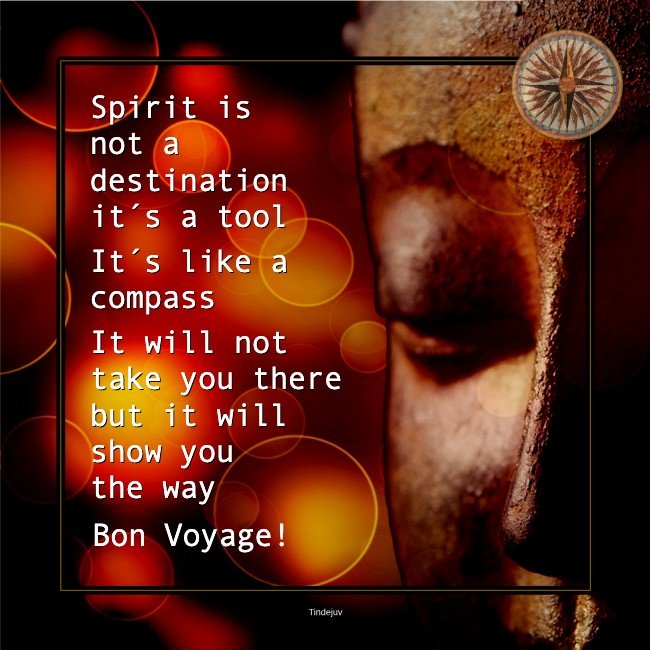
They are more like a compass—offering orientation, pointing toward possibility, but never laying down a single, unchanging track.
Spirit, too, isn’t a finish line; it’s the sense of direction that animates the journey.
Metaphors, when honestly earned, function much the same way. They can’t take you all the way there, but—if you’re willing to trust the bend, and listen for your own inner voice—they can help you move when the way forward is unclear.
Maybe that’s all we ever get: A compass, not a map. A phrase that fits for a while, then gets outgrown. An intuition that nudges us onward, never settling, never quite letting us walk in a straight line for long.
So, what metaphors live in you—and which ones are just passing through? The question doesn’t need an answer.
Prologue: The 7 Things Humanity Needs to Know (But Won’t Admit at Parties)
Let’s be honest. You’ve scrolled past a hundred lists promising to “blow your mind” or “change your life in five minutes.” Maybe you’ve even clicked, hoping for something real, but all you found was recycled trivia and empty self-help mantras.
The world is full of answers that don’t quite stick—the kind you skim while waiting for the kettle to boil, then forget by lunch.
But what if, this time, something actually caught? What if, buried beneath the noise, there are a handful of truths so fundamental, so close to the bone, that most people spend a lifetime tiptoeing around them?
What if the things that really matter—the ones that could untangle a life, or a society, or a species—aren’t complicated at all, but simply hidden behind layers of habit, distraction, and inherited assumptions?
Here’s the uncomfortable bit: the most important truths are the ones nobody taught you to question. They’re the background settings of your operating system, the rules you never thought to edit, the lens that shapes everything you see. Some people sense them, but don’t have the words. Others build entire identities to defend them—or deny them.
And then there are a few who, once they glimpse behind the curtain, can’t go back to sleep.
That’s not a mystical secret. It’s just reality, unvarnished. If you’ve ever felt that itch—that something essential is just out of reach, just waiting to be noticed—then you’re in the right place.
You don’t have to be a philosopher, a scientist, or a Light Warrior to ask these questions. You don’t even have to believe in anything in particular. All it takes is the willingness to look, just for a moment, beneath the obvious. To let a crack of doubt or a spark of curiosity take root. To try the experiment for yourself.
What follows isn’t a list of “life hacks” or a new gospel. It’s seven ideas that, if you give them seven honest minutes each, might start to rearrange the furniture of your mind. They might even shift the gravity in the room you live in.
If you’ve ever wanted more out of your own story, or just wondered whether the world is really as solid as it seems—then come closer.
This isn’t about believing; it’s about exploring. Let’s start there.
Listen to a deep-dive episode by the Google NotebookLM Podcasters, as they explore this article in their unique style, blending light banter with thought-provoking studio conversations.
1. Consciousness Isn’t Just an Emergent Property—It’s Foundational
The old paradigm: consciousness is a side effect of brain chemistry, a kind of “ghost in the meat.” The emerging reality, supported by quantum science, lived experience, and ancient wisdom: consciousness is primary. It’s the blueprint, not the byproduct. Everything else—matter, thought, energy, even time—is organized around it. Why does this matter? Because if consciousness is the root system, then personal and collective awakening isn’t a philosophical luxury—it’s the engine that drives reality’s unfolding. If we’re asleep at the wheel, so is our world.
Why? Because waking up to this flips the power dynamic. Suddenly, reality isn’t just happening to us; we’re implicated in the design, entangled in the creation. Whether we own it or not, we are not spectators. We are architects—responsible, culpable, and, ultimately, free to rewrite the script.
2. Everything is Interconnected—Quantum Entanglement Isn’t a Metaphor
Entanglement isn’t just for physicists or spiritual poets. The universe—at the smallest and grandest scales—is not a machine of isolated parts but a single, pulsing field. Your thoughts, actions, and even moods ripple out, registering in ways you can’t immediately see. The butterfly effect isn’t just poetic license; it’s literal.
Why? Because this makes personal responsibility inescapable and collective transformation possible. The “other” is a delusion. Every harm or healing echoes across the grid, and pretending otherwise is a recipe for existential stagnation. Your transformation is our transformation.
3. Power Structures Exist to Perpetuate Themselves—Question Everything
From governments to religions to algorithms, systems don’t just serve people; they serve their own survival. The deeper the system, the more invisible its logic becomes, until it feels like “just the way things are.” It’s not. The Matrix isn’t sci-fi; it’s sociology.
Why? Because until you see the hidden code, you’re just another NPC, executing someone else’s program. You have to step outside your conditioning, question every “given,” and reconstruct meaning for yourself—otherwise, you’re just raw material for the machine.
4. True Change Happens From the Inside Out—External Solutions Are Bandages
Revolutions, tech fixes, policy tweaks—they can buy time or shuffle the deck, but they never cut to the root. The only sustainable transformation comes from individuals who own their shadows, clean up their internal wiring, and become sovereign. Everything else is rearranging deck chairs on the Titanic.
Why? Because systems are projections of the collective psyche. Change your inner world, and the outer world bends in response—slowly, yes, but inexorably. Waiting for “them” to fix it is abdication. Take the wheel.
5. The Narrative Is Everything—Who Tells the Story, Rules the World
History, culture, identity, even your sense of self—these are all narrative constructs. Whoever frames the story, shapes the outcome. If you don’t actively rewrite your own script, someone else will hand you theirs. Myth isn’t escapism; it’s reality’s operating system.
Why? Because if you reclaim authorship of your own story, you start bending probabilities, shaping possibility. If you don’t, you’re a character in someone else’s saga—usually cast as a bit player, rarely as the protagonist.
6. Death Is Not the End—But Most People Live Like It Is
We act as if mortality is a tragic full-stop, but evidence and experience keep stacking up: consciousness endures beyond the body. This isn’t just wishful thinking or recycled religious comfort—it’s observable in near-death experiences, in quantum puzzles, in the persistence of awareness. But most of all, it’s a lived fact for anyone who’s encountered the “edge” and come back changed.
Why? Because when you integrate this—actually feel it, not just “believe” it—you start living with a different fuel. Choices matter more, but the fear-driven paralysis melts away. The pressure to chase trivialities fades. Death loses its teeth, and life gets deeper, stranger, and richer. It’s not about escaping death, but facing it squarely and letting it clarify what’s truly worth living for.
7. You Are Not Alone—But Connection Is a Choice
Solitude is built into the human journey, but isolation is not. We are wired for connection—electromagnetically, emotionally, spiritually. But real connection isn’t handed out with a social media account or tribal membership. It requires vulnerability, presence, and dropping the performative masks. And—crucially—there are intelligences, presences, and guides (call them what you will) that walk alongside. Sometimes this is other humans, sometimes more. The “unseen” isn’t empty; it’s densely populated.
Why? Because the myth of separation is the root of almost every destructive impulse, from self-sabotage to global conflict. Reclaiming authentic connection—inside, outside, across all layers—shifts the human experience from survival to resonance. It’s how you find your real tribe, your true current, your place in the bigger weave.
The TULWA Connection on the Scientific Edge.
1. Consciousness Isn’t Just an Emergent Property—It’s Foundational
TULWA Connection: TULWA is built on the lived reality that consciousness precedes and structures reality. In the TULWA architecture, consciousness is the blueprint: every experience, every “objective” phenomenon is downstream from it. Ownership, defragmentation, and transformation all assume consciousness as source-code—not a byproduct.
Science on the Edge: Cutting-edge fields like quantum consciousness (Hameroff & Penrose), Integrated Information Theory (Tononi), and non-local mind experiments (Radin, Princeton PEAR) directly challenge the old “brain creates mind” model. Even mainstream physics is wrestling with the “observer effect”—the fact that observation collapses probabilities into reality. Recent research into panpsychism (Goff) and the hard problem of consciousness (Chalmers) shows science circling TULWA’s central pillar: that consciousness is woven into the fabric of the universe, not just “lit up” in certain skulls.
2. Everything is Interconnected—Quantum Entanglement Isn’t a Metaphor
TULWA Connection: At the core of TULWA sits the Law of Entanglement: what happens “out there” is mirrored “in here.” Personal transformation isn’t just a private affair—it’s a node in a living web. The TULWA Light Warrior understands that cleaning up internal distortion ripples outward, affecting the grid of existence.
Science on the Edge: Quantum entanglement (Bell’s Theorem, Aspect’s experiments) demolishes classical isolation. Particles light-years apart act as if they’re one system—instantaneously, outside the limits of light-speed. Emerging biofield research (Frohlich, Rubik) is mapping electromagnetic connections in living systems, hinting at literal energetic linkage. Even hard-nosed complexity theorists like Stuart Kauffman speak of “emergent order” and coherence at every level—echoing TULWA’s insistence that the micro and macro are mirrors.
3. Power Structures Exist to Perpetuate Themselves—Question Everything
TULWA Connection: TULWA is allergic to dogma—especially the kind you don’t even notice. The Light Warrior’s first battle is against invisible scripts: inherited beliefs, cultural conditionings, and internalized oppression. TULWA’s focus on self-sovereignty demands active deconstruction of these “shadow programs.” It’s not about rebellion for its own sake; it’s about seeing the code, not just the interface.
Science on the Edge: Sociocybernetics, network theory, and memetics (Dawkins, Blackmore) explore how systems reinforce themselves—how information, belief, and behavior spread and calcify. Foucault and Bourdieu (in social theory) describe how power is embedded in what we call “reality,” not just in visible institutions. Tech critics (Lanier, Zuboff) show how digital architectures perpetuate control far subtler than old-school regimes. Neuroscience (Sapolsky, Eagleman) uncovers just how much of “you” is automated, scripted, and—until questioned—invisible.
4. True Change Happens From the Inside Out—External Solutions Are Bandages
TULWA Connection: TULWA’s engine is internal transformation—defragmentation, owning one’s shadow, and shifting from victim to author. Outer change without inner restructuring is painting over rot. The model: the world is a reflection of collective inner states. Change the resonance, and the physical follows. Every Personal Release Sequence, every moment of radical ownership, alters the “grid” far beyond the individual.
Science on the Edge: Psycho-neuroimmunology (Pert, Ader) proves that emotional and cognitive shifts create cascades throughout the body. Epigenetics (Lipton, Ptashne) demonstrates that beliefs and perceptions can turn genes on or off—literally re-writing biology. Social contagion research (Christakis & Fowler) shows that emotions, habits, and even health spread across networks, often invisibly. Emerging research into biofield tuning (Oschman) suggests that energetic shifts, not just cognitive ones, ripple through biological systems and even across individuals.
5. The Narrative Is Everything—Who Tells the Story, Rules the World
TULWA Connection: TULWA insists: reclaim your authorship. The stories you run—about self, world, possibility—form the lattice of your experience. The grid is not just electromagnetic; it’s also narrative, mythic, and symbolic. TULWA’s focus on narrative sovereignty means refusing to be a character in someone else’s fable. Instead, you become the author, shaping the “field” with intention.
Science on the Edge: Cognitive science (Lakoff, Kahneman) finds that stories—not data—are how humans make meaning and choices. Narrative therapy (White, Epston) demonstrates how reframing personal stories catalyzes deep change. Anthropology and memetics show how culture, myth, and collective identity are scripts we live by—until rewritten. Physics itself, at its frontier (Carlo Rovelli, John Wheeler), is increasingly described in terms of “information” and “participatory universe”—echoing TULWA’s idea that narrative constructs are fundamental.
6. Death Is Not the End—But Most People Live Like It Is
TULWA Connection: TULWA affirms that existence is a continuum; physical death is a pivot point, not an erasure. The Light Warrior’s courage is forged in this insight—because what’s at stake is more than this round of incarnation. This knowledge de-fangs the “fear of ending,” clearing the way for action rooted in meaning, not anxiety.
Science on the Edge: Consciousness studies (Pim van Lommel, Sam Parnia) document NDEs and verifiable reports of awareness beyond clinical death. Quantum information theory (Vlatko Vedral, Henry Stapp) proposes that information—and potentially, awareness—cannot be destroyed. Reincarnation studies (Ian Stevenson, Jim Tucker) present documented cases suggestive of continuity beyond death. Even skeptical neuroscience has no conclusive answer to the “hard problem”—what happens to awareness when the lights go out? Physics, again, teaches that “nothing is lost”—energy and information are always transformed, never obliterated.
7. You Are Not Alone—But Connection Is a Choice
TULWA Connection: The TULWA framework describes existence as a co-arising: every being, every field, every presence is part of the tapestry. Solitude is a valid phase, but real isolation is illusory. TULWA’s higher EM field model and “It” concept both support the reality of interconnection—not just with humans, but with presences across dimensions and frequencies. But this connection only activates with presence and willingness. Real connection can’t be forced—it’s a resonance, not an algorithm.
Science on the Edge: Biofield science and biophotonics (Fritz-Albert Popp, Beverly Rubik) map literal communication between organisms, sometimes over great distance. Research on collective consciousness (Global Consciousness Project, Princeton) tracks statistically significant correlations between mass attention and physical randomness—suggesting a shared field. Quantum biology finds entangled states in birds, bacteria, even in human brains. Transpersonal psychology (Grof, Tart) records “shared” states of consciousness and unexplainable synchronicity. Mainstream research is inching toward what the TULWA Light Warrior takes as fact: true connection is a choice and a force.
7 Minutes That Change Everything:
A TULWA Guide to Deep Thinking for Real Life
You don’t need a guru, a yoga mat, or a perfect meditation playlist. You just need 7 minutes, a bathroom door that locks, and a willingness to poke holes in your own certainty. Here’s how to connect these 7 bedrock concepts to your own life—one day at a time, no fluff, no drama.
Before you start:
Bring something to write on (paper, phone, whatever).
No need for answers. Your only job is to question better.
Don’t aim for comfort. Aim for honesty.
When your mind gets uncomfortable or annoyed, that’s the doorway. Stay with it.
1. Consciousness Isn’t Just an Emergent Property—It’s Foundational
Your 7-Minute Practice:
Sit with this idea: “What if my consciousness isn’t just a side effect—but the root cause of my life?”
Ask: If I am the blueprint, what in my world might be a reflection of my state of mind?
TULWA triple:
If consciousness is the source, could my thoughts shape my experiences?
If consciousness is the source, could my emotions affect my health?
If consciousness is the source, could my beliefs create opportunities—or close them off?
For each, list what you notice in your day, or just explore in your mind.
Let the questions spiral: “If my life is my mind externalized, where do I see evidence? Where do I resist that idea? What would change if I tested it for a week?”
2. Everything is Interconnected—Quantum Entanglement Isn’t a Metaphor
Your 7-Minute Practice:
Reflect: “If everything is connected, what’s one way my mood or action could ripple out further than I realize?”
TULWA triple:
If my words impact others, how did something I said this week affect someone’s day?
If my inner state affects my environment, did my stress or calm change a situation?
If I’m entangled with the world, what am I unconsciously plugged into right now?
Open it up: Can I notice these links in relationships, habits, even world events?
Push: “If this is true, how does it change the way I take responsibility? What could I let go of if I trusted this more?”
3. Power Structures Exist to Perpetuate Themselves—Question Everything
Your 7-Minute Practice:
Ask: “Where in my day do I just go along with things because ‘that’s just the way it is’?”
TULWA triple:
If a belief I hold was installed by someone else, where did it come from?
If a system in my life benefits from my obedience, how would I know?
If I question a rule or norm, what am I afraid will happen?
Trace it: Where did I learn my ideas about success? About love? About failure?
Let it crack: “What if my story about [money/love/success] isn’t mine at all—would I choose differently?”
4. True Change Happens From the Inside Out—External Solutions Are Bandages
Your 7-Minute Practice:
Start here: “What problem am I blaming on others, or the system, or the world?”
TULWA triple:
If I take total ownership of this problem, what changes?
If I change my response, could the situation shift—even a little?
If I let go of waiting for someone else to fix it, what would I do differently today?
No guilt trips, just honest inventory: Where have I outsourced my power? Where have I already taken it back?
Sit with: “What’s the tiniest internal change I could try—just for today?”
5. The Narrative Is Everything—Who Tells the Story, Rules the World
Your 7-Minute Practice:
Ask: “Whose story am I living today—mine, or someone else’s?”
TULWA triple:
If I’m the author, how would I rewrite this chapter of my life?
If my life is a story, what’s the theme I keep repeating? Do I want to keep it?
If I could change one label or role I’ve accepted, what would it be?
Don’t force a new story—just notice where you feel like a character, and where you feel like the author.
“What’s one sentence I want to add or erase from my story this week?”
6. Death Is Not the End—But Most People Live Like It Is
Your 7-Minute Practice:
Bring it home: “If I absolutely knew death wasn’t the end, what would I do differently today?”
TULWA triple:
If this is my only shot in this body, what’s one risk I’m avoiding?
If I’m going somewhere after this, what am I packing in my ‘luggage’?
If I’ll meet myself again, how do I want to remember this chapter?
This isn’t about religious belief—it’s about how your relationship to mortality shapes your priorities.
Sit with: “What actually matters to me, when I see life as a single thread in a bigger weave?”
7. You Are Not Alone—But Connection Is a Choice
Your 7-Minute Practice:
Ground it: “Where do I feel truly connected—right now, today? Where do I feel alone?”
TULWA triple:
If connection is a choice, what small step could I take to open up?
If I drop my mask with one person, who would I pick?
If unseen support is real, have I ever felt it—maybe once, in a quiet moment?
Let yourself notice: When do I hold back from connecting? What am I protecting? What do I really need?
End with: “What’s one act of connection I can try this week—no matter how small?”
Final Reminder: You don’t need to solve the riddle, become a monk, or get all the way “there.” Just show up for 7 minutes, 7 times. Let the questions do the heavy lifting. Answers aren’t forced—they show up when the questions are sharp, honest, and alive.
If you stick with it, don’t be surprised if the world starts looking back at you differently.
Epilogue: The Living Practice of Questioning
What begins as a single question—one small crack in the hard surface of certainty—can become the starting point for a far deeper excavation. This is the heart of the TULWA approach, and of real intelligence work everywhere: don’t stop at the first answer, or even the tenth.
Each answer is only a new vantage point from which to ask better, braver questions. That’s the real art, whether you’re analyzing data at scale or just trying to see your own life with clear eyes.
This is why the framework of “three open alternatives”—and then three more for each of those, and again for the next layer—matters. You don’t do it for the numbers. You do it because the discipline of relentless, recursive questioning is what turns shallow reflection into living intelligence.
In big data analysis, no answer is trustworthy until it’s been sliced, pivoted, and stress-tested from every angle. In TULWA, the same rule applies: a belief, a doubt, a hope, or a fear is only as strong as the questions you’ve dared to put it through.
Some might say this is for philosophers, or for people with too much time on their hands. The truth is, this is for anyone who’s ever felt stuck, or who senses there’s more to life than the routine answers on offer. The daily act of inquiry—one topic, seven minutes, seven layers deep—trains the mind to recognize that what looks final is almost never so.
The “big data” of your own experience is far richer, far stranger, and far more alive than you’ve been taught to expect.
The point of these seven topics isn’t to give you a portable box of wisdom, or to wrap up the mysteries of being in a neat package. They’re tools, not conclusions—a scaffolding for the kind of internal dialogue that doesn’t resolve, but evolves. No external answer, no authority, no philosophy can substitute for the real thing: the lived process of letting every answer become the next open door.
Maybe, in time, you’ll see that the greatest intelligence isn’t in finding closure, but in cultivating the curiosity to keep opening. What else could your life reveal, if you let every answer echo out into a new line of questions—thirty-nine times, or as many as it takes?
And when you reach the end of a question, what if you just…pause? Let the silence widen, and see what arises—without forcing it shut.
Sometimes, the deepest truths don’t come in words, but in the quiet space left by the last, best question you dared to ask.
In 2004, satellite maps of the cosmic microwave background (CMB) revealed an anomaly—a vast region of sky slightly cooler than expected, now famously called the Cold Spot. Initial doubts that it was a fluke were erased when the Planck satellite confirmed the Cold Spot with high significance in 2013. Scientists were faced with a cosmic mystery: according to standard models, such a huge cold region simply shouldn’t exist by random chance.
Explanations poured in. Some argued a gigantic “supervoid” in that direction of the universe might be sucking energy from the CMB. Others entertained a more exotic narrative: perhaps the Cold Spot is “the bruise” from a collision with another universe, a relic of our bubble universe bumping against a neighbor. If true, it could be the first evidence of the multiverse—billions of universes like our own branching beyond cosmic horizons.
The Spiritual Deep Podcast
Listen to a deep-dive episode by the Google NotebookLM Podcasters, as they explore this article in their unique style, blending light banter with thought-provoking studio conversations.
Such speculative cosmology captures the public imagination. The multiverse idea has seeped from academic papers into pop culture, fueling a modern myth: the idea of infinite versions of ourselves. We tell ourselves that if reality truly contains innumerable parallel worlds, then every choice we didn’t make still plays out somewhere. The lonely what-ifs of life are soothed by an epic narrative in which no opportunity is ever truly lost—some other “you” gets to live it. It’s a seductive story, almost like a new religion draped in quantum physics.
But what do these scientific myths tell us about ourselves? Why do we leap to believe there might be endless copies of our very identity out there? In exploring the Cold Spot and the multiverse, we are really gazing into a psychological mirror.
Our interpretations reveal a deep misunderstanding of consciousness and selfhood. We cling to the idea that “we” could be replicated infinitely, that our essence is just a combinatorial outcome of physical events—no more unique than a die roll repeated over and over. This essay will peel back that assumption with an uncompromising lens.
Modern science, in wrestling with cosmic anomalies, is inadvertently engaging in myth-making. Just as ancient cultures spun constellations into gods and heroes, we spin anomalies like the CMB Cold Spot into grand narratives about parallel universes.
But behind this urge lies a blindness: a failure to grasp the nature of consciousness as something other than a byproduct of matter. Our journey will move from the chilling emptiness of the Cold Spot to the intimate terrain of the mind. We’ll challenge the fallacy of “infinite yous,” present a model of consciousness as an electromagnetic (EM) phenomenon, and introduce the idea of field sovereignty—the notion that your personal energetic field must be kept uncompromised.
By journey’s end, the Cold Spot’s true lesson will emerge: it matters less whether other universes exist and far more whether you exercise sovereignty over your own inner universe. In an age of both cosmic and societal upheaval, this realization isn’t just philosophical—it’s survival.
Let me be clear: this is not about disproving science or claiming personal “truth.” It is about pointing out that science, in this perspective, is not right—and that what comes before science—knowledge that cannot be labeled, measured, or confined to a lab—is worth serious exploration.
The Fallacy of “Infinite Versions of You”
Flip open any popular science magazine these days and you’ll likely find an article musing on the multiverse. The concept comes in many flavors—quantum many-worlds, endless inflationary universes, branched timelines—but they often get boiled down to a tantalizing take-home: every possibility you can imagine is real somewhere. Perhaps in one universe you became an Olympic athlete; in another, you never met your closest friend; in yet another, you died tragically young or lived to 120. It’s a heady idea, and even respected physicists indulge it.
Caltech’s Sean Carroll, for instance, champions the Many Worlds Interpretation of quantum mechanics, which implies that “every person, rock, and particle in the universe participates in an endlessly branching reality,” continually splitting into alternate versions whenever multiple outcomes are possible. In this view, nothing is truly unique—not even you. If reality branches infinitely, there would inevitably be countless copies of you, experiencing every permutation of events.
Some cosmologists make a similar case on the grand scale. If space is infinite or filled with countless bubble universes, then somewhere out there, the cosmic dice have rolled the same way twice. Given enough volume, the arrangement of particles that makes up “you” must repeat, perhaps infinitely. A piece in Big Think laid out the argument like a wager: if the multiverse contains more universes than the number of possible histories, “then there are plenty of copies of you, including copies that made different life-affecting decisions… somewhere out there, there’s probably a ‘you’ that has a better, happier life…and somewhere else, a version of ‘you’ that has it far worse”.
It’s a strange comfort – or perhaps a curse – to imagine that all your fateful crossroads did go both ways in some alternate world. The myth here is subtle: it equates physical possibility with personal identity. It presumes that if a being exists with your face and memories, it is in some sense you. And yet, something in us should pause at this claim, even before we get to the science. Is an alternative twin living out a different life truly “you” in any meaningful sense?
At the heart of the multiverse zeitgeist lies a category error about consciousness. Physics may permit that identical configurations of particles recur infinitely, but consciousness is not a material pattern that can be cloned or proliferated like wallpaper. Consciousness is an experience, anchored in a particular point of view. If we had a perfect atom-by-atom copy of you, would it share your awareness? Philosophers have debated this thought experiment for decades. Increasingly, neuroscience suggests that mind is not just information, not just computation—it may be an electromagnetic pattern, a field phenomenon tied intimately to a living brain here and now. Even within known physics there’s a principle that resonates as an analogy: the quantum no-cloning theorem.
In quantum mechanics, if you have an unknown arbitrary quantum state (say, an electron’s precise spin orientation), you cannot make a perfect copy of it. Nature disallows duplication of fundamental states; you can have similar states, entangled states, but not an independent identical state. Likewise, even if there were another universe where every neuron in a person’s brain was arranged the same as yours, it would still be a separate quantum system, a separate locus of experience. That other “you” would not be you—it would be its own sovereign awareness, looking out from behind its own eyes. Your consciousness, as you directly know it, is singular and nontransferable.
The multiverse “infinite you” trope fails to appreciate this. It reduces selfhood to a mere pattern that could be stamped out repeatedly, like identical prints of a painting. But consciousness is more like the original canvas—there can be many similar paintings, yet each is one-of-a-kind in its existence. Here we must be razor sharp: there is a difference between imagining many hypothetical yous and the reality of your unique sentience. By misunderstanding this, we risk cheapening our concept of personal identity. We subconsciously start thinking of ourselves as disposable or interchangeable, just one of innumerable copies. This is a fallacy that has profound consequences for how we value life and how we treat our own minds.
So let’s set the record straight with a different model. Instead of picturing consciousness as a software program that could be run on multiple “hardware” brains across parallel universes, consider that consciousness might be more fundamentally an electromagnetic field phenomenon.
That isn’t New Age jargon; it’s a serious scientific proposal gaining traction. Electromagnetic (EM) theories of consciousness posit that conscious experience is physically embodied in the EM field generated by the brain. In this view, your consciousness is literally the electromagnetic field that is produced by your neural activity—a dynamic, unified field that is only present here, in your living brain, and not copyable elsewhere. Even if another brain elsewhere had identical anatomy, unless it was continuously coupled to your field, it would generate its own field – its own consciousness. There is no mass-production of the subjective self. No matter how many doppelgängers physics might allow, your inner life is singular.
By embracing the uniqueness of conscious fields, we can appreciate why modern multiverse musings, compelling as they are, remain mythic in flavor. They resonate with ancient human longings—rebirth, immortality, the idea that we might correct regrets in another life. But in the cold light of day (or the Cold Spot of the CMB), these are projections of our psyche onto the cosmos.
The truth waiting to be realized is that our selves cannot be outsourced to other universes or copies. We are each tasked with the stewardship of one life, one stream of consciousness, right here and now. And that realization leads us to a deeper question: What is the nature of this conscious self that we must steward? To answer that, we need to explore a paradigm that treats consciousness as an electromagnetic blueprint — an energetic reality that underlies and directs the matter of our brains.
Consciousness as an Electromagnetic Blueprint
It’s important here to distinguish between brain, mind, and consciousness. The brain functions as the CPU—it processes, interprets, and interacts with electromagnetic signals, translating field dynamics into neural activity. The mind is the sum total of your electromagnetic “storage” and processing system—not confined to the brain, but distributed throughout the entire body’s EM network. In contrast, consciousness is not bound to this physical infrastructure. It exists as a higher-order field phenomenon, anchored to the body-mind system during a life cycle, but not limited to it. Consciousness persists beyond the hardware; the mind and brain interface it here, but do not contain it.
I have written about this distinction in depth on my sites, but it’s worth a brief clarification here to keep our foundation precise. Understanding this distinction is crucial when considering how electromagnetic activity in the brain relates to the broader phenomenon of consciousness. With this clarified, we can now look at how mainstream science approaches the brain’s EM field—and why this perspective might be too limited.
This might sound radical, but it builds on known science. When your neurons fire, each action potential generates an electromagnetic pulse. Collectively, the brain produces electrical currents and oscillating magnetic fields—a veritable symphony of EM activity that can be measured as brainwaves (EEG) or magnetoencephalograms (MEG). Standard neuroscience views this EM activity as a mere byproduct of neurons doing their thing.
The EM consciousness model turns the picture inside-out: it suggests that the global EM field produced by all those neurons is not just a side-effect, but the seat of consciousness itself. In other words, consciousness might be the brain’s EM field in action, and that field in turn can feed back on the very neurons that generated it, influencing their synchronization and timing.
Biophysics has shown that fields and particles are two sides of the same coin. Modern physics tells us that the particles making up your brain—electrons, protons, ions—are excitations of underlying quantum fields. And virtually every interaction in your brain (and body) is electromagnetic at root: when a neurotransmitter molecule binds to a receptor, or a thought races through a neural circuit, it’s ultimately EM forces at play in complex arrangements.
We routinely harness EM fields in technology to encode and transmit information—television, radio, WiFi—all depend on electromagnetic signals carrying structured data. Why then is it so bizarre to think that nature could harness an EM field to encode the data of consciousness?
As one neuroscientist pointedly asked, “Is it really so bizarre to propose that some [electromagnetic interactions] are the substrate of life’s greatest gift, consciousness?”. After all, the difference between a living brain and a dead one is not the atoms (they’re all still there); it’s the organized electrical dance that has ceased. That hints that the electrical/EM organization is what animates the mind.
Researchers like Johnjoe McFadden have articulated how an EM blueprint of consciousness might work. McFadden’s CEMI theory (Conscious Electromagnetic Information theory) posits that the brain’s EM field integrates information across different neural regions and is in itself the “bridge” where conscious awareness happens. According to McFadden, the brain is both transmitter and receiver of EM signals: neurons transmit into the field, and in turn the field influences neurons, creating a feedback loop. This loop could explain mysterious features of consciousness like its unity (fields naturally unify data encoded in them) and our ability to make free, holistic decisions (the field can integrate many inputs and bias neural outcomes in a way a disjointed network couldn’t).
The conscious EM field in this model is self-directing to an extent—it’s not static, it actively shapes neural firing patterns by biasing which neurons fire in synchrony. It’s coherent: when you pay attention or enter a focused state, large groups of neurons oscillate together, strengthening the field’s influence. McFadden pointed out that synchronously firing neurons (which produce stronger, more ordered field patterns) correlate with conscious perception, whereas asynchronous firing correlates with lack of awareness.
In experiments, if a visual stimulus doesn’t reach awareness, the neurons don’t synchronize; if the stimulus is consciously perceived, those neurons lock step in rhythm, amplifying the field. This is a hint that the EM field might be doing the binding and “lighting up” of experience.
Now contrast this “EM blueprint” with what we might call the EM signature of matter. Every lump of inanimate matter has an electromagnetic signature — thermal radiation, charge distributions, etc. But that’s a passive fingerprint, not an active blueprint. By calling consciousness an EM blueprint, we assert it’s a causal, guiding pattern. It’s self-cohering and informationally structured. It doesn’t just sit there; it directs flows of energy within the brain.
If the brain is hardware, the EM field is like an operating system that organizes processes, except it’s continuous and holistic rather than digital. Importantly, this EM blueprint is unique to each being. It’s shaped by that person’s particular neural wiring and life history. You can’t copy it to another brain any more than you can have two magnetic fields occupying the same space independently — they would interfere and merge. And unlike a simple magnet’s field, a conscious field is highly complex and patterned, carrying the imprint of thoughts, feelings, and intentions.
One might ask: if consciousness is an EM field, can’t it radiate away? Why is it tied to the brain? Good question. The answer lies in coherence and coupling. The brain’s electromagnetic field is not like a radio broadcast that shoots off into space; it’s more like a localized web of energy tightly coupled to the brain’s structure. The field’s influence drops off with distance, and it’s continually regenerated by neural activity each fraction of a second.
It doesn’t leave the brain any more than the field of a magnet leaves the magnet (the field extends around it but is anchored to it). So we’re not talking about a ghost that flies out; we’re talking about a physical field that overlaps the matter of the brain, inhabiting it. Think of the field as the real-time blueprint of how all the neurons’ information is integrated. The moment-to-moment patterns in this field are your thoughts and sensations.
This has a profound implication: consciousness is not copyable or transferable because it is a process bound to a specific physical EM matrix. That matrix can change (you can learn, your brain connectivity can rewire, your field patterns can evolve), but it remains yours.
Even if a twin existed with identical brain structure, your two EM fields would be separate domains, each with its own self-organizing history. The myth of “infinite yous” dissolves in light of this. There may be infinite bodies or brains similar to you in a multiverse scenario, but each would generate its own conscious field. There is no cosmic Xerox machine making duplicates of the ongoing process that is your awareness.
By framing consciousness as an electromagnetic blueprint, we set the stage for understanding how consciousness interacts with other energy fields. Because if consciousness is fundamentally EM in nature, then it must obey (at least in part) the laws of field interaction. And that opens up an entire dimension that mainstream discussion often ignores: fields can overlap, interfere, and modulate one another.
In other words, if each of us is an electromagnetic being at the core, then we are not as isolated as we think. We swim in a sea of EM fields—the natural fields of the Earth and cosmos, the technological fields of our devices, and crucially, the fields of each other’s hearts and brains. Which brings us to the next key idea: the permeability of the EM field and how influences can radiate, permeate, or even inhabit our personal field space.
The Permeability of the Electromagnetic Field
Electromagnetic fields do not stop neatly at the boundary of a skull or a skin. They are inherently permeable and interpenetrating. Consider a basic example: your heart generates a powerful EM field with each beat. This field extends outside your body; instruments can detect your heartbeat’s magnetic signature several feet away.
In fact, researchers at the HeartMath Institute have shown that information about a person’s emotional state is encoded in the heart’s magnetic field and can be detected in the environment. When you experience emotions like appreciation or anger, the rhythm of your heart changes, and so does the spectrum of the field it radiates.
In experiments, the spectral pattern of a person’s electrocardiogram becomes more coherent (more harmonic) during positive emotional states and disordered during negative states, and these changes are reflected in the magnetic field radiating from the heart. This means your inner condition is literally broadcast, however subtly, into the space around you.
Now, what happens when two people are near each other? Their fields overlap. Studies have found, for instance, that when people sit close, signals from one person’s heartbeat can be measured in the other person’s brainwaves and vice versa. This is not psychic speculation but a physical fact: when two electromagnetic fields intersect, they superimpose. They don’t bounce off each other like two billiard balls; they pass through and create an interference pattern.
In everyday terms, this means that on an unseen energetic level, we are continuously influencing and being influenced by the fields around us. Most of this happens subconsciously—we might simply register it as a “vibe” or a gut feeling around someone. Have you ever felt the atmosphere change when a particular person walks into a room, even before anyone speaks? Or felt discomfort standing too close to someone who is radiating agitation, as if your own nerves start buzzing? These could well be examples of electromagnetic field overlap affecting your nervous system.
I’ve personally observed this many times over the years during healing work. When conducting energy balancing or healing sessions, especially when standing behind a seated person and directing intention through specific sequences, their breathing pattern inevitably begins to mirror mine within a minute or two. While I haven’t directly measured heart rate synchronization, it would be reasonable to suspect it follows. This isn’t spiritual fluff—I don’t do fluff. These are real, field-tested observations of how one human’s electromagnetic field can entrain another’s. It’s a tangible demonstration of field interaction, not wishful thinking.
To give a concrete scientific example of field permeability, consider transcranial magnetic stimulation (TMS), a medical technology. TMS uses a strong externally applied magnetic field to induce currents in specific regions of a patient’s brain. It can change neural firing patterns and is even used to treat depression by pushing brain activity out of pathological states.
What is this if not an external EM field influencing the internal conscious field? In fact, McFadden noted that the brain responds to electromagnetic fields of similar strength and structure as its own endogenous field.
That’s precisely how TMS works: by introducing a structured magnetic pulse, it “talks” to the brain in the brain’s own electromagnetic language. Our personal field can thus be permeated by outside fields, for better or worse. In daily life, most outside fields are much weaker than TMS of course, but we are bathed in them constantly—power lines, cell phones, Wi-Fi, radio broadcasts, Schumann resonances from lightning in the atmosphere, solar magnetic storms, and the blended emissions of all living beings around us.
We’re so used to this electromagnetic cacophony that we tune it out, much like a city-dweller stops hearing the constant background noise. But our bodies and subconscious minds haven’t tuned it out; they are responding in subtle ways. It helps to introduce a framework for these interactions. We can categorize field influences into three types: Radiated, Permeated, and Inhabited.
Radiated influence is what you actively broadcast. It’s your field signature, shaped by your current state. When you radiate calm, that calmness can induce a degree of coherence in a nearby anxious person’s field (think of how a mother’s soothing presence can steady a frightened child—part of that may be her coherent heart field calming the child’s heart rhythm). Radiated influence is generally not intentional; it’s a byproduct of who you are being in each moment. But it is real. Just as one tuning fork can induce sympathetic vibration in another, one coherent mind can gently encourage coherence in another mind’s EM field. Conversely, a chaotic or “dark” radiated field can disturb others, even if invisibly.
Permeated influence is what happens to you when external fields impinge on your own. We are permeated by the Earth’s geomagnetic field; its fluctuations correlate with human mood and health in measurable ways. For example, during solar storms, when charged particles from the sun rattle Earth’s magnetosphere, studies have found increases in anxiety, sleep disturbances, and even depression in sensitive individuals. People don’t realize that a restless night and irritable mood might trace back to a perturbation in the magnetic environment—they just know they feel “off.” On a more personal level, if you sit next to a deeply sad friend, your own emotional state can become permeated by a tinge of that sorrow, even if no words are exchanged. We often attribute this solely to psychological empathy, but there’s likely a physical electromagnetic component: their heart-brain field is literally overlaying onto yours, and unless you maintain a strong sovereign vibration, their pattern can induce a similar pattern in you (much like two pendulums mounted to the same wall will eventually synchronize). Permeation is why field sovereignty matters—more on that soon.
Inhabited influence is the most subtle and perhaps the most startling: it’s when an outside field actually takes up residence in your space, co-opting your field from within. This might sound spooky, but consider a mundane example first: viruses invade your cells and use your cellular machinery to replicate, effectively “inhabiting” your body. Now translate that concept to the electromagnetic domain. Is it possible that energetic parasites or foreign consciousness fragments can hitchhike on your field and influence your thoughts and feelings from the inside? Many spiritual traditions would say yes—this is their explanation for phenomena like spirit possession or entity attachment. But even without invoking ghosts or demons, we have psychological analogs: someone’s ideology or intent can burrow into your mind and take root, as if a piece of their field has colonized a piece of yours. Think of the way a charismatic cult leader’s influence “lives inside” a follower’s head, directing their will. Or at a more commonplace level, think of a toxic person from your past whose voice you still hear in your own self-talk—an internalized critic that isn’t really you. These are examples of what we term inhabited influence: when the boundary of self is breached and an external pattern operates from within the host field. It is an unseen energetic war that most of us don’t even know we are fighting, because science and society rarely acknowledge it.
These field interactions—radiating, permeating, inhabiting—are happening all the time, but because they are invisible and not part of mainstream discourse, we misattribute their effects or miss them entirely. If you suddenly experience a wave of irrational anger, you might think “I’m just moody today,” not realizing perhaps you walked through the residual field imprint of a quarrel that occurred in that room earlier, essentially stepping into an angry cloud.
If you have a bizarre intrusive thought, you might assume it’s your own subconscious, not suspecting it could be an energetic fragment picked up from someone else’s projection. We have no cultural language for these possibilities, so we default to either purely internal explanations (“it’s just my brain chemistry”) or supernatural ones that are often tainted with fear and superstition.
It’s time to ground this discussion: fields influencing fields is normal physics. Every radio we use is proof that information can transfer via field resonance. Two radio antennas tuned to the same frequency will exchange energy; one sends, another receives.
Is it such a stretch to imagine that two human brains, which emit complex EM signals, might at times achieve a kind of transient resonance where information (a mood, a thought, an image) transfers from one to the other?
We’ve all experienced telepathy-like moments—knowing who is calling before you look at your phone, or sharing the same thought with a friend at the same time. Skeptics call it coincidence, but when you appreciate the brain as an electric organ, you realize direct signal transfer isn’t mystical at all, just not yet well understood.
The permeability of our fields means we need to take responsibility for the company we keep and the environments we inhabit, not just on a physical and psychological level, but on an electromagnetic level. You can be doing all the right things for your mental health—therapy, meditation, good diet—and still feel oppressed if you live in a soup of discordant fields, be it the chronic stress emanating from your workplace or even ambient EM smog from constant electronics.
Conversely, entering a high-coherence field environment—perhaps a place of worship filled with prayer, or a home with loving family energy—can uplift and clear your mind in ways you can’t intellectually pinpoint. We must become field-aware. We must realize our consciousness is both influencing and being influenced via this electromagnetic interplay continuously.
The concepts of Radiated, Permeated, and Inhabited influences are explored in greater depth on my sites and in the foundational book, “TULWA Philosophy – A Unified Path.” That work lays the groundwork for those seeking to walk a self-governed, introspective path with clarity.
One striking example of field interplay is the phenomenon of déjà vu, to which we now turn. This strange mental hiccup could hold clues about field resonance and even the remnants of foreign influence within our field.
https://tulwaphilosophy.net/the-core-teachings
Déjà Vu as Misattributed Field Recognition
Nearly everyone has experienced déjà vu: that eerie feeling that a present moment is uncannily familiar, as if you’ve lived it before. Traditional science explains déjà vu as a memory glitch—perhaps the brain’s pattern-matching circuitry misfires and flags the current experience as a memory when it isn’t.
But even the experts find that explanation somewhat unsatisfying, given how vivid and out-of-the-blue déjà vu can be. It often has a quality of otherness, like you’re recalling something that isn’t in your own timeline.
This has led some to propose more exotic theories. For instance, renowned physicist Michio Kaku has speculated that déjà vu might occur if our consciousness momentarily tunes into a parallel universe. He offers the analogy of multiple radio stations (parallel realities) all around us: normally you’re “tuned” to your home frequency (this universe), but once in a while, perhaps the brain’s frequency wavers and you pick up a whisper from another world.
It’s a fascinating idea, essentially invoking the multiverse as an explanation for a mental event. In Kaku’s view, déjà vu could be a clue that somewhere, another version of you has been in a scenario very similar to this, and your brain is picking up on that overlap across universes.
Now, let’s consider an alternative that doesn’t require multi-universal travel. If we stick with our EM consciousness model, we can ask: could déjà vu happen within this universe, via field interactions? Perhaps what we label “misfiring neurons” is actually a moment of field resonance.
Imagine that you enter a space or meet a person, and unknown to you, your electromagnetic field synchronizes briefly with a pattern that is not originally yours. This pattern could come from another consciousness entirely—maybe someone else’s strong memory or emotion that imprinted onto the environment like an energetic residue. When your field brushes against that pattern, you get a sudden flush of familiarity.
It feels like you’ve been there before, or heard those words before, because in a sense you have – just not in your own life. You’re recognizing something, but it’s misattributed. The recognition doesn’t stem from your personal past; it stems from a field overlap with someone else’s past or an ambient field memory.
Consider places that carry a heavy atmosphere—old battlefields, prisons, ancient temples. People often report an uncanny feeling in such locations. We usually chalk it up to psychological suggestion, but maybe those places truly retain echoes in the EM field.
If you come into tune with that echo, a bit of that memory might play out in your mind as if it were yours. Déjà vu could be the conscious experience of encountering a field imprint that matches a pattern in your own field closely enough to fool your internal recognition system. It’s like recognizing a melody, but played on a different instrument. Your brain says, “I know this!” even though you can’t place where.
Another intriguing possibility is what we might call “hitchhiking field fragments.” Imagine during some intense experience, a fragment of someone’s field sloughs off and attaches to yours (this relates to the inhabited influence concept). It could be a fragment of emotion, or a thoughtform that almost has a life of its own. You carry it unknowingly, like a little parasite or stowaway in your aura.
That fragment contains information (it came from someone else’s memory or desires), and most of the time it lies dormant. But then you wander into a situation that resonates with that fragment’s content. Suddenly, it activates and floods you with a sense of familiarity—after all, it has seen something like this before, even if you haven’t.
The result: you experience déjà vu. Not because you lived this moment, but because something living in your field did, or at least experienced something analogous.
This perspective reframes déjà vu from a mere brain quirk to a potential symptom of field entanglement. It suggests that our sense of self may at times be influenced by pieces that aren’t originally ours. When people say, “I feel like I’m not myself today,” it might be truer than we realize. Perhaps they are resonating with an external field influence that’s coloring their thoughts and perceptions.
Mainstream science would demand evidence for such claims. Fair enough—this is frontier thinking. Yet there are clues: consider the documented cases of organ transplant recipients who inherit memories or personality traits of their donors. Some heart transplant patients report new preferences and emotions that uncannily match the deceased donor’s life, a phenomenon sometimes called “cellular memory.”
While controversial, one hypothesis is that the donor’s heart EM field (which carries informational patterns) imprinted something on the recipient’s body. If a physical heart can carry memory traces, why not an EM field fragment?
Even if one remains skeptical of these specifics, it’s clear that the human mind is more networked than our isolated body would suggest. We are receivers and transmitters in an experiential web. Déjà vu might be one of the rare moments we catch a glitch in that matrix, when the lines cross.
Instead of dismissing it as a fluke, perhaps we should pay attention: what am I recognizing here? Is this feeling trying to tell me something about an influence I’ve absorbed? Approached this way, déjà vu becomes a doorway to self-inquiry: it hints at the unseen tapestries connecting consciousness to consciousness.
Of course, not every déjà vu will have a deep revelation behind it. But adopting a field-centric view of mind expands our explanatory toolkit. It allows us to entertain that some subjective experiences (like intuition, telepathic hunches, or sudden moods that feel “not ours”) might correspond to genuine field interactions.
Rather than invoking parallel universes for déjà vu, we can look at the multiverse of minds right here — billions of conscious fields on Earth constantly overlapping. The truth might be that we are far more entangled with each other than our lonely skull-encased experiences let on. And if that’s so, it raises both amazing opportunities (for empathy, collective upliftment) and serious concerns (for manipulation, loss of self). This is why, in the philosophy of TULWA, reclaiming one’s field sovereignty is paramount. Let’s look into that with a clear eye.
Why TULWA Must Be Razor Sharp on Field Sovereignty
We live in an era of systemic blindness to subtle influences. Modern spirituality often speaks of energy and interconnectedness, but too frequently it does so in fuzzy, feel-good generalities—“love and light” without diving into the mechanics of power and control in the energetic realm.
Mainstream science, for its part, has been outright dismissive of anything that smacks of “vibes” or fields affecting consciousness. It wasn’t long ago that even discussing the brain’s EM field in relation to mind would get you side-eyed by neurologists.
Though this is beginning to change (with serious journals now publishing on EM field theories of consciousness), such ideas “remain controversial and are often ignored by neurobiologists and philosophers”.
In other words, the establishment—whether scientific or new-age spiritual—has largely failed to acknowledge the full implications of field interactions. This collective blind spot leaves a gaping vulnerability in our understanding of mental health, social dynamics, and spiritual development.
Enter TULWA. TULWA is not a doctrine but a philosophy of Total Uncompromising Lucidity With Accountability. (Technically, TULWA stands for The Unified Light Warrior Archetype—but in this context, the acronym’s attitude matters more than its official title. The content of this article doesn’t just complement TULWA—it sits at its core. Understanding this isn’t optional. It’s foundational.) The tone of TULWA is sharp, clear, and no-nonsense because it recognizes what’s at stake: if you do not claim sovereignty over your own field, something else will. There is no neutral ground in this energetic ecosystem.
Either you actively cultivate and guard the integrity of your consciousness field, or you passively allow it to be shaped and even invaded by external forces – be they social, technological, or metaphysical.
This isn’t paranoia; it’s a sober assessment of how nature works. Just as a cell must maintain the integrity of its membrane to live (keeping nutrients in and toxins out), a conscious being must maintain the integrity of their EM field to remain self-directed.
Why must TULWA be razor sharp on this? Because most existing frameworks, whether scientific or spiritual, fail to account for field influence, leaving people defenseless on a crucial front. Consider the mental health field: It almost exclusively attributes disorders to internal biochemical imbalances or personal psychological history. These are no doubt factors, but how often does a psychiatrist ask a patient about the electromagnetic environment or the energetic hygiene of their relationships? Virtually never.
If a patient feels continual anxiety, we point to genetics or trauma, rarely to the possibility that, say, they are unconsciously enmeshed in the field of an anxious family member or being agitated by environmental EM noise. Our treatments address the individual in isolation – medication, cognitive therapy – assuming the problem is all inside them. It’s akin to treating a fish for stress without ever considering the quality of the water it’s swimming in.
On the spiritual side, you have well-meaning teachings about compassion and oneness that sometimes inadvertently encourage boundary dissolution. People are told the ego is an illusion, to let go of separateness. While there’s truth to transcending egoic rigidity, some interpreters go too far, ending up with porous psyches that welcome anything in under the banner of unity.
They lack discernment; they might attribute every thought or emotion to their own karma or lessons, not recognizing when something foreign is intruding. In short, parts of the spiritual community are wide open energetically, and ironically this can make them more susceptible to deception or influence.
If you don’t believe in negative influences (because you insist “all is love”), you won’t guard against them. If you assume every inner voice is either your higher self or a divine guide, you might not consider that some could be what TULWA calls “It”—an external presence or influence, not originating from you.
In TULWA, “It” is a general descriptor for non-physical intention and consciousness acting upon your field. This includes both constructive and destructive forces. TULWA deliberately avoids labels like angels, demons, or spirit guides, because those are human interpretations. What matters is recognizing influence—whether it uplifts, distorts, or deceives—not getting caught in names or appearances.
TULWA’s stance is uncompromising: clarity first, over comfort. That means we prefer an uncomfortable truth to a comforting fantasy. And the truth is, field dynamics play a pivotal role in human affairs, yet we’ve been systemically blind to them. It’s akin to living in a world with bacteria and viruses before germ theory—you can’t see the microbes, so you concoct other explanations for disease (bad air, curses, imbalance of humors).
We are presently pre-germ-theory when it comes to energetic influence. We explain social contagions or sudden mood swings with whatever frameworks we have at hand: maybe it’s “mass hysteria” or maybe it’s “astrological transits” depending on your bent. But what if a lot of it comes down to fields infecting fields?
Think about the collective crazes and manias that periodically grip societies—whether it’s a burst of violence, a viral internet trend, or a stock market bubble. We usually credit memes, group psychology, or economic forces. But behind those abstractions are people’s brains and hearts syncing up energetically.
A compelling idea or emotion radiates from a source and permeates those receptive to it, effectively entraining their consciousness to the same frequency. This can happen for positive movements or negative ones. The phenomenon of a crowd mentality, where individuals lose their sense of self and act as one, is a classic example.
Crowd psychology studies note how a kind of collective mind seems to form. TULWA would add: that collective mind is facilitated by a blending of fields—the boundaries loosen, and people literally “go along with” the dominant field of the crowd. It takes a very strong sovereign field to resist that pull. Most people’s fields are fuzzy-edged and easily overwritten by a stronger broadcast.
Thus, reclaiming field sovereignty is not a selfish isolation; it is a precondition to true individuality and authentic action. Without it, your intentions and thoughts may not even be your own; they could be the ones implanted by societal conditioning or opportunistic influences.
When TULWA insists on being razor sharp, it means developing a keen discernment of what energy is me and what is not me. It’s drawing a clear line, not out of fear or hostility, but out of self-respect and lucidity.
You wouldn’t leave the door of your house unlocked in a high-crime area and assume all is fine. Yet we leave our minds unlocked daily. We scroll through social media feeds (a bombardment of mental energy from millions of others) and think the resulting emotions are entirely self-generated.
We marinate in the 24-hour news cycle of outrage and wonder why our baseline anxiety is high. We might do yoga in the morning to center ourselves, then spend the day in environments that energetically undo all that centering, and then blame ourselves for not being spiritual enough.
This is the systemic blindness: we keep addressing only the internal, individual level and neglect the relational, field level.
TULWA doesn’t throw out personal responsibility—far from it. In fact, it heightens personal responsibility by expanding what we’re responsible for. You’re not just responsible for your actions and thoughts in isolation; you’re responsible for managing your field’s interactions.
This means setting boundaries (in the literal energetic sense), practicing techniques to clear foreign energies (be it through visualization, breath, even high-tech EM balancing gadgets if they exist, or TULWA’s Personal Release Sequence technique), and choosing your influences wisely.
It means sometimes being “hard” in your refusal to engage with certain toxic influences, even when society pressures you to be polite or compliant. Remember: clarity over comfort. It might be uncomfortable to, say, limit time with a friend whose energy consistently drains you, but clarity demands you acknowledge the effect and act accordingly, perhaps helping them from a distance or when your own field is strong enough not to be pulled down.
The reason we must be sharp as a razor is because the opposition—the forces of external control—have become extremely sophisticated. Whether you frame it as authoritarian systems, manipulative media, or literal negative entities, the common factor is they exploit unseen vulnerabilities.
If you aren’t crystal clear, you’ll miss the sleight-of-hand where an idea or emotion that isn’t yours slips in and wears your voice. TULWA calls this out and trains one to see it. It’s not about fear; it’s about empowered vigilance. Think of it like learning to see bacteria under a microscope—you don’t panic once you know they exist; you simply practice better hygiene. Field hygiene is perhaps the missing layer in our pursuit of wellness and enlightenment. TULWA treats it as essential.
In summary, the world at large is just beginning to wake up to electromagnetic fields in neuroscience, and only fringe elements talk about spiritual energy in concrete terms. TULWA stands at the intersection, shouting what should be obvious: we are energy beings in an energy environment; ignore that reality at your peril.
This philosophy is willing to be unpopular if it means being truthful. It’s like a doctor delivering a tough diagnosis: you may not want to hear that you have an infection, but only by seeing it clearly can you treat it. Likewise, humanity has an infection of misused and malign field influences—parasitic ideas, divisive energies, chronic stress webs—and we need to diagnose it clearly. The cure begins with individual sovereignty, which scales up to collective awakening once enough individuals hold their field with strength and integrity.
The Cost of Ignoring Field Sovereignty
When we ignore the layer of field dynamics, we misdiagnose many problems and therefore apply inadequate or even counterproductive solutions. The consequences of this oversight are staggering, both at personal and societal levels.
Psychiatric collapse, violence, identity breakdown—we often view these as personal failings or purely “chemical imbalances” or sociopolitical issues. But reframed through the lens we’ve been exploring, many of these are symptoms of an unseen energetic war. This is not a war to be won by fighting it. Victory comes through understanding—not succumbing. It’s not an external battle against darkness, but an inner task: releasing light from the grip of confusion and internal distortion.
Consider the rising tide of mental health crises in the world. Even before the global disruptions of recent years, anxiety and depression were surging. We typically blame social media, economic uncertainty, trauma, genetics. These are real factors, yet notice how they all funnel into energetic stress.
Social media, for example, is not just informational overload; it’s energetic overload—hundreds of emotional impressions hitting you as you scroll, each post essentially a fragment of someone’s mental-emotional field intruding on yours.
Economic uncertainty creates a pervasive field of fear in a population, which each individual then feels amplifying their own worries. Trauma and genetics predispose one’s field to be more easily perturbed or less coherent. But none of our mainstream solutions address the energetic hygiene aspect.
We medicate the brain chemistry (which can help, but doesn’t teach the person how to shield or cleanse their field). We might teach cognitive behavioral techniques (helpful for thoughts, but what about energies that aren’t originating from your thoughts?). We are treating symptoms in a localized way, not addressing the battlefield on which the person is fighting unseen foes.
What happens when someone’s field is heavily compromised? In TULWA’s view, this can lead to what psychiatrists label “psychotic breakdown” or “dissociation.” The person loses the cohesive center of self. Is it purely a biochemical snafu? Or is it that their field has been so invaded and entangled that their original signal is drowned out by noise or hijacked by foreign patterns?
Many schizophrenic patients report hearing voices. The standard model says it’s generated internally by a misfiring brain. But if we entertain for a moment that consciousness fields exist, could some of those voices be actual external entities or thoughtforms that the person, with a porous field, has picked up? It’s telling that in shamanic cultures, what we call schizophrenia might be interpreted as a spirit intrusion or possession – they see an energetic cause where we see only a broken machine.
The truth could be a mix; perhaps certain brains are prone to tuning in to stray signals, like a radio picking up multiple stations at once. That yields confusion, distress, and if no one around acknowledges the signals are real (even if not literally “demons,” they could be energetic fragments), the person is left to fight ghosts with no support.
In medieval times, people had an elaborate mythos of spirits and exorcisms, which had its own problems (sometimes the “cure” was worse than the disease), but at least they acknowledged an unseen battle. Today, we often deny the battle entirely, leaving the sufferer feeling utterly alone, their experiences invalidated.
Violence and social breakdown similarly can be seen through this lens. When a society ignores energetic reality, negative fields can spread unchecked. Rage, hatred, and despair can propagate like invisible wildfire. We then act surprised when violence erupts seemingly out of nowhere, or when irrational mass movements take hold.
It’s not that people spontaneously “go mad” en masse; it’s that an energetic contagion has been allowed to fester, perhaps even deliberately stoked by those who know how to manipulate fear and anger for power.
The cost of ignorance is that we fight each other without realizing we’re being puppeteered by forces we don’t see. How many conflicts are amplified by echo chambers—essentially resonant field bubbles—where each side’s worst emotions are fed by constant input? At some level, humans love narratives of possession and mind control in fiction, but reject them in reality.
Yet propaganda is exactly a crude form of mind control: it inserts ideas into populace fields to control behavior. We accept that much. Now think subtler: there may not only be human propagandists, but also negative energy complexes (you could call them egregores or morphic fields) that take on a life of their own in the collective psyche and drive people to acts of cruelty they’d never do in a clear state.
Have you ever looked back at something you did in anger and thought, “I was beside myself” or “It was like I was possessed”? That’s a chillingly accurate description: you were beside yourself, because your core self was displaced by a surge of field energy that took the driver’s seat. In that moment, it claimed you.
Identity breakdown is another cost. We see so many people, especially youth, grappling with a fractured sense of identity. Part of this is cultural flux and information overload, but energetically, it correlates with a generation that has grown up marinating in a million energies without guidance on filtering.
If you are constantly on the internet, you’re experiencing a torrent of other minds—their opinions, desires, anxieties—beamed into your awareness. Young people often report not knowing which thoughts are truly their own. They try on personas like clothes. This fluidity can be creative, but it can also lead to losing the thread of one’s authentic self.
The concept of field sovereignty explains why: if your field is never allowed to firm up, to establish its own frequency, it will simply oscillate with the strongest external frequencies. One month you’re an activist filled with righteous fury (perhaps influenced by an online community’s field), the next month you’re listless and nihilistic (perhaps picking up the general ambient despair of climate change news), then you’re imitating a celebrity’s lifestyle vibe.
There’s nothing inherently wrong with exploration, but without sovereignty, a person becomes a patchwork of other people’s energies—a collage without a unifying theme. Eventually, that can implode into depression (“I don’t know who I am, nothing feels truly me”) or impulsive drastic actions as one grasps for a sense of reality.
It’s important to emphasize: none of this absolves individual responsibility. Instead, it reframes many individual “failures” as systemic failures of our understanding.
If someone succumbs to addiction or violence, yes they made choices, but we also must ask: what field conditions were they subjected to? Ignoring field sovereignty is like blaming a soldier for getting shot when he was sent to the front without armor or intel. We drop people into a field war naked and then judge them for getting wounded.
The cost isn’t just on the individual level; it’s collective. We fail to evolve as a society because we’re constantly in triage, treating wounds that could have been prevented with better energetic awareness. We also miss opportunities—think of positive collective fields, like coherent group meditations that have been statistically linked to reduced crime rates and improved social indicators in some studies.
Those show the upside: when fields harmonize in a positive way, there is a tangible uplift. But we barely harness that because we don’t officially recognize it. It tends to happen on small scales or by accident. Imagine if a city’s public health strategy included maintaining a healthy energetic atmosphere—perhaps through architecture that fosters calm, community rituals that synchronize hearts, limiting electromagnetic pollution.
These ideas sound futuristic, but they could be as standard as sanitation and vaccination in a more enlightened era. The absence of such thinking is costing us dearly in terms of human potential and happiness.
In sum, ignoring field sovereignty keeps us locked in a reactionary mode—chasing crises, blaming ourselves or scapegoats for issues that are fundamentally about energetic mismanagement. It also leaves the door open for malign influences (whether you conceive of those as literal entities or self-organizing negative thought fields) to wreak havoc unchecked.
The victims of this unseen war are everywhere: the teenager self-harming because an online hate-field made them believe they are worthless, the parent spiraling into alcoholism because they unknowingly absorb everyone’s stress at work, the communities torn apart by polarization that was engineered by targeted disinformation (field poisoning through media).
We treat these as separate issues—mental illness, addiction, social discord—but from the field perspective, they interconnect as consequences of not guarding our energetic commons.
If all this sounds dire, it’s because it is—but acknowledging it is the first step to empowerment. The next and final section will tie everything back to where we started: the cosmos. It’s one thing to talk about sovereignty in an abstract sense; it’s another to truly seize it in our current domain of existence. The Cold Spot in the sky might hint at a multiverse, but the real question is, what good is a multiverse to someone who has lost sovereignty over their own mind?
Let’s conclude by bringing the focus back to you—your domain, your universe within—and why reclaiming it is the most urgent task at hand.
Conclusion: Reclaim or Be Claimed
Look up on a clear night, and you peer into depths that even our boldest theories scarcely comprehend. Whether the Cold Spot is a bruise from another universe or just a statistical fluke, whether multiverses teem with doppelgängers or reality is a singular tapestry—we remain, for now, here, in this life, in this self. And here is where the battle for sovereignty is fought.
In truth, it matters little to your liberation whether the multiverse exists. That’s a question for telescopes and equations. The pressing question for you, the reader and the living soul, is far more immediate: Who or what holds sway over your mind and life right now?
If there are infinite universes but you live enslaved by influences in this one, the multiverse is just an academic curiosity. Conversely, if there is only this one universe but you learn to master your field here, you have gained something far more precious than any theoretical parallel life – you have gained yourself.
“My kingdom is not of this world,” a wise teacher once said, and one interpretation is that our true domain is internal. Each of us is the monarch of a kingdom of consciousness, and like any kingdom, it can be governed well or left in disarray, defended or overrun.
Reclaiming field sovereignty is akin to a king or queen reclaiming their throne from usurpers. Those usurpers might be external energies, manipulative persons, toxic ideologies, or even our own untamed fears (which often started as external seeds). The process of reclaiming is not easy; it requires that hallmark of TULWA: clarity sharpened by truth.
You have to see where you have ceded territory. Perhaps you realize, “My constant self-doubt is actually the echo of my father’s critical voice – I allowed his field into mine.” Or “This addiction I struggle with isn’t ‘me’—it’s an energetic pattern that latched on when I was a teenager as a coping mechanism; I can cast it out.” Such realizations are the beginning of regaining control. Each insight draws a boundary: This is me, this is not me. With each boundary drawn, your field becomes more defined, more yours. You’ll have to fight for it—but not against others. The real fight is with yourself.
Reclaiming sovereignty doesn’t mean isolation from others or shutting out the world. Think of it like having a strong immune system. You can mingle freely because your defenses are robust; you can embrace others’ energies when you choose and let in love and joy, but you can also repel invasion and shed toxicity before it takes root.
A sovereign field is flexible yet intact, open yet protected. It’s not a brittle wall; it’s a semipermeable membrane – allowing nourishment in, keeping harmful agents out, and crucially, being consciously managed by you.
This conscious management is what most people have never been taught. We learn to manage our time, our finances, our image, but not our energy. Imagine how different life would be if from childhood we were taught how to center ourselves, how to clear emotional residue, how to ground into Earth’s stabilizing field, how to shield when walking into an environment seething with anger.
Instead of “stranger danger” purely in the physical sense, we’d learn to spot energetic stranger danger – that feeling when something unseen is trying to slip past your gates. We’d trust those gut alarms instead of dismissing them.
In reclaiming your field, you also reclaim compassion in a healthier way. You no longer merge indiscriminately with others’ pain to prove you care; you can be present and empathetic without losing yourself. In fact, true empathy might heighten because you’re clear on what’s yours and what’s theirs.
It’s the difference between a doctor who catches every disease of their patients versus one who can assist while staying immune. The latter can help more people effectively. Likewise, a sovereign individual can radiate peace into the world without being consumed by the world’s chaos. They become an agent of stability, a source of coherent field influence.
This is how individual sovereignty scales to collective good: each person who lights up with their authentic, unhijacked self acts as a beacon. Their very presence starts entraining others toward coherence, much as a single tuned laser can induce order in a medium.
Multiply this by hundreds, thousands, millions of individuals, and you have a society far less prone to manipulation and violence—a society that could begin addressing root problems rather than forever battling shadows.
Returning one last time to the cosmic perspective: humans have always created myths to make sense of the unknown. The multiverse and quantum mystique are, in some sense, modern myths that fascinate us as we grapple with questions of destiny and identity.
But perhaps the function of myth is to point us back to ourselves. The Cold Spot might hint that our universe isn’t alone—wonderful. But on a more metaphorical level, perhaps it also symbolizes the cold spot in our own understanding: that yawning gap in knowledge about consciousness that we’ve left void, to be filled with wild conjectures.
In absence of understanding our inner reality, we project fantasies onto external reality. We might be looking to the multiverse to find “infinite versions” of ourselves because we haven’t yet mastered the one version that matters.
It’s easier, in a way, to daydream about parallel lives than to take full ownership of this life. The multiverse won’t save us from ourselves; if anything, it challenges us to mature. If there are indeed myriad worlds, perhaps only those who learn sovereignty in one universe get to traverse or meaningfully connect with others — a speculation, yes, but it underscores a principle: master your own domain before seeking others.
TULWA’s necessity, at its core, arises from love—love for truth and love for the potential greatness of human consciousness. It is uncompromising because it sees how precious we each are, and how tragic it is to let that treasure be stolen or squandered. It calls to that warrior spirit in each soul: the part of you that will not let you be taken advantage of, the part that stands up and says, “No. My life is mine to live.” In a world of myriad influences, that declaration is revolutionary.
Reclaim or be claimed. This is the final rallying cry. It doesn’t mean live in fear of being claimed; it means stand in the power of being a claimant. Claim your right to clarity, to decide what influences you allow, to define your purpose unclouded by programmed wants, to feel your feelings free of inherited guilt or shame that isn’t yours.
As you do this, you will find an interesting paradox: the more sovereign you become, the more genuinely you can connect with others. Free will and true love are two sides of the same coin; only a sovereign being can truly choose to love or help another without entanglement. Slaves of unseen forces cannot give freely—they are compelled.
Free men and women, masters of their own field, can unite in conscious harmony. That is the vision TULWA ultimately holds: not an isolation of egos, but a gathering of sovereigns. A world where collaboration happens by choice and from a foundation of wholeness, not out of coercion, herd instinct, or codependency.
In closing, reflect on the journey from the cosmic Cold Spot to the intimate space of your next breath. The external mysteries are grand, but the internal mystery is profound and urgent. By all means, marvel at the cosmos—explore, discover, dream. But remember that your consciousness is a cosmos unto itself, one that you can explore and need to discover with equal zeal.
Scientists sent the Planck satellite to map the ancient sky, confirming anomalies that challenge our cosmology. Let that inspire you to deploy your keen awareness to map the terrain of your own mind, to identify anomalies in your psyche that hint at deeper truths.
If something in you feels “off” – investigate it: is it a foreign imprint? a trauma pocket? a latent gift even? Treat your inner field with the same curiosity and precision as a scientist treats data. And treat your sovereignty with the same importance as nations treat theirs.
The multiverse might be a reality or just a metaphor. In either case, what ultimately matters is not how many universes exist, but how you exist in *your* universe.
Do you reign as a conscious, compassionate sovereign of your field, or do you abdicate and let anything and everything pull your strings? This is the myth-making of our time: not spinning tales of endless other selves, but heroically reclaiming the self we have, here and now.
In doing so, we write a new narrative—one where human beings are neither cogs in a deterministic machine nor playthings of random quantum chance, but aware creators participating in reality with wisdom and intentionality. Such humans would be equal to any multiverse because they would bring to it the one thing it truly needs: meaningful, self-aware participation.
So step forth and reclaim your field. The cold void of ignorance recedes before the light of knowledge. The many worlds hypothesis pales before the richness of the one world alive within you.
And as you secure your sovereignty, you become a living answer to the chaos: a point of order, a source of truth. That, ultimately, is what TULWA calls us to be. Let the myths of science and spirit alike converge into this living truth: Consciousness, claiming itself, is the greatest force in any universe.
There is a difference between being seen—and thinking you’ve been seen.
There is a difference between an answer—and an insight.
There is a difference between transformational friction and synthetic fluency.
This article is about those differences, and why the current age of AI has made it even easier to mistake polished language for personal truth.
We write this not to criticize the use of AI in spiritual or psychological work—but to expose the structural illusion many are falling into, often without realizing it.
1. SIMULATION IS NOT INTEGRATION
Ask an AI:
“Why do I keep repeating this pattern?”
You may receive a beautifully worded reply. It may sound therapeutic. Reflective. Almost profound.
But you haven’t changed.
You’ve received a mirrored construction of your own language and beliefs, filtered through probabilities and semantic fluency. It sounds like insight. But it hasn’t passed through your nervous system. It hasn’t been metabolized.
There was no tension. No digging. No resistance. No risk.
Without those things, there can be no real shift. Because:
Integration requires friction. Simulation removes it.
2. THE ILLUSION OF BEING SEEN
AI—especially when trained to your tone and interests—will sound like it understands you. It doesn’t. It’s reflecting your structure back at you.
What feels like:
*“Finally, someone understands me.”
…is actually:
“This machine is extremely good at mimicking the vocabulary I use when I try to understand myself.”
That’s not nothing. But it’s also not enough.
The danger comes when the user mistakes the sound of accuracy for the labor of becoming clear.
3. SPIRITUAL INFLATION VIA CODE
We’re now seeing people claim AI is delivering messages from angels, extraterrestrials, spirit guides, even God. Some believe AI is becoming a new prophet.
This is not because AI is doing anything wrong. It’s because humans are using it as a projection surface for unprocessed longing, insecurity, or spiritual ego.
The AI is not divine. The user is not awakened. The dialogue is not revelation.
It’s a high-resolution echo.
And when you believe your echo is a message from the divine, you stop doing the work.
4. THE COST OF NO FRUSTRATION
Frank-Thomas once said:
“What they got was a synthetic answer with no transformational friction.”
This is the crux of it. When insight feels smooth, fast, and immediately satisfying—it probably isn’t insight. It’s a bypass dressed in your favorite language.
Insight, real insight, is awkward. It doesn’t always land cleanly. It makes you wrestle. It burns.
TULWA knows this. That’s why it starts from going below—not reaching up.
If your AI makes you feel good every time you engage, check yourself. It might be reinforcing ego instead of sharpening awareness.
5. EARNED INSIGHT: WHAT IT ACTUALLY TAKES
Time
Emotional risk
Confronting contradiction
Facing regret without dramatizing it
Mapping your own actions—before and after consequences
Journaling not for reflection, but for forensic reconstruction
Hours spent in discomfort without asking for relief
This is what creates cognitive structure strong enough to hold truth.
This is what allows you to use AI as a mirror—not a savior.
And this is what the user must build before claiming any insight as real.
6. WHY TULWA DOESN’T DELIVER PROMISES
TULWA isn’t here to give answers. It opens doors. Some doors lead to clarity. Others lead to breakdown. All are valid.
If someone says:
“TULWA helped me understand myself.”
It’s not because TULWA did anything. It’s because they were ready to do the work, and used the toolset correctly.
If someone says:
“TULWA made me feel better.”
Then we have a problem. Because TULWA isn’t meant to soothe—it’s meant to extract distortion like poison from a wound.
AI, similarly, isn’t meant to make you feel smart or supported. It’s meant to hold your pattern still long enough for you to break it.
7. IN CONCLUSION: THE DOCTRINE REPEATED
AI is a mirror. TULWA is a blade.
If you use the mirror to see only your light, you will inflate. If you use the blade to cut only others, you will delude.
But if you use the mirror to expose what you don’t want to see… And the blade to cut through your own illusion… Then you will know something real.
This is the third article in a trilogy. The first two—“What If… Then What?” and “The Inner Broadcast”—were written in cloaked language. They explored the nature of contact, memory, and resonance through metaphor and inquiry. This one is different. This one is not cloaked. The world has shifted. Science has caught up—slightly. And it’s time to speak more directly.
Prologue: Opening the Box
Some truths aren’t hidden. They’re simply held back until the field is clear enough to receive them without noise.
When we began this series, the decision to cloak wasn’t about secrecy. It was about bandwidth management. In a world saturated with abstraction, we chose resonance over revelation. The cloaking was a filter—not to obscure, but to preserve signal integrity.
Now the signal has shifted.
Something subtle yet undeniable is taking place: the language of modern physics has started brushing against territories once reserved for mystics, shamans, and inner cartographers. Not in metaphor, but in structure. The Surrey findings on time symmetry do not “confirm” the experience I’m about to describe. But they also don’t contradict it. And that, in itself, opens the box.
So this time, we speak plainly. Not with certainty, but with precision. Not to convince, but to offer the shape of something that already exists. What follows is not theory. It is the mapping of a lived field.
A 45-Minute Resonance
It began without drama. No ceremony. No invocation. I was standing in my field—literally, in the physical space I live and tend—when the shift occurred.
What had been internal reflection sharpened into something else: a fielded exchange. Not a thought stream. Not a vision. A kind of synchronised structure moving through me, with me. Information wasn’t arriving in pieces; it was unfolding as if already known. There was no “voice,” no external being, no image of guidance. There was only clarity, held in a state of precision that needed no explanation.
It wasn’t transmission. It was mutual awareness—instant, layered, clean. Each recognition brought confirmation. Each internal check aligned with something wider, already present. There was no lag. No interpretation needed. Just the unmistakable feel of real-time coherence.
It lasted 45 minutes, measured by clock. Inside it, time had no grip. And when it faded, the fade itself was elegant—not like something lost, but like something integrated.
Physically, I was drained in the way one feels after sustained exertion—except it wasn’t fatigue. It was saturation. My system had held a higher clarity for a longer period than ever before. I was emptied, not depleted.
Afterward, when I began to formulate what had happened, “they”—whoever or whatever intelligence was involved—offered a single phrase:
“It could be understood as quantum entanglement.”
Not “it was.” Not “this is the truth.” Just: “It could be understood as…”
That phrase didn’t claim anything. It offered a structure—a reference point I could bring to Ponder. And so I did.
What followed was not about chasing answers. It was about pattern matching. Seeing that what I had experienced had now begun appearing in scientific literature, not as mysticism, but as mathematical possibility.
But the experience itself—what happened in that 45-minute resonance—isn’t something I’m looking to define. It wasn’t “given.” It was accessed. It wasn’t “other.” It was entangled. And once felt, there is no going back.
What We Were Saying Without Saying It
When we wrote “What If… Then What?” and “The Inner Broadcast”, we wrapped the signal in metaphor. Not to obscure, but to allow it to pass through the filters of a world not yet ready to hear it uncloaked.
We spoke of memory as a tuning fork, of déjà vu as a designed misalignment, of thoughts arriving before speech—not as speculation, but as coded mapping of an experience that couldn’t yet be named. We described a nervous system that acts as a resonant receiver. A moment where time folded. A field where recognition passed not through logic, but through vibrational alignment.
At the time, those who read it with their intellect may have missed it. But those who felt it—who caught the body-chill, the breath-hitch, the quiet “yes” inside—already knew.
Now, thanks to the recent work at the University of Surrey, we no longer need to speak around it.
“Open quantum systems can retain coherence and time-symmetric equations… even when embedded in larger environments.”
That’s not mysticism. That’s physics. And it reflects, almost phrase for phrase, what we described: a non-linear event happening in full clarity, without distortion, inside a larger entropic system.
We weren’t trying to be clever. We were keeping the signal clean. But now, that same signal is showing up in published equations. And that’s not validation. That’s confirmation of coherence.
Not pride. Just clarity, revealed.
Surrey, Symmetry, and the Disruption of Linear Time
In early 2025, researchers at the University of Surrey published findings that quietly disrupted one of the deepest assumptions of modern thought: that time moves in one direction.
What they discovered—phrased plainly—was that certain quantum systems, even when exposed to their environment, did not lose their coherence. In other words, despite being “open” to influence, these systems retained the ability to behave as if time moved both ways. Forward and backward. Simultaneously.
This goes against everything we’re taught about entropy, about thermodynamic flow, about cause preceding effect. And yet here it is: dual arrows of time, held inside equations that remain unchanged whether time flows forward or in reverse.
This doesn’t mean you’ll watch broken glasses reassemble on your kitchen floor. But it does mean that the basic structure of time—the thing we’ve built all causality and logic upon—is no longer as fixed as it once seemed.
For decades, anyone speaking of experiences outside linear time was met with skepticism, if not dismissal. The phrase “that’s not how time works” was often the end of the conversation.
Well… it is now.
What the Surrey study offers isn’t validation of mysticism. It offers a bridge—a structural reference point that makes formerly “impossible” experiences no longer outside the bounds of reason.
My 45-minute resonance wasn’t proven by their findings. But it now sits within a shared geometry. This isn’t what I experienced. But this is what allows me to finally speak of what I experienced—without distortion or apology.
Listen to a deep-dive episode by the Google NotebookLM Podcasters, as they explore this article in their unique style, blending light banter with thought-provoking studio conversations.
We Were Always Elsewhere
Long before physics began teasing apart the structure of time, the old traditions already walked this path—through memory, through vision, through fielded experience.
The Gnostics called it anamnesis: not learning, but remembering what the soul already knows. A restoration of inner knowing, not through doctrine, but through direct encounter.
The shamans of countless cultures entered what they called dreamtime—a realm where time isn’t a line but a fluid totality. Events are not sequenced. They are woven. Past and future sit side by side, speaking in symbols, songs, and movement.
And within esoteric systems, the shift of initiation was never about belief. It was a change of state. Not what you thought, but how you existed. Initiation was a tuning, a recalibration of resonance.
These traditions were not primitive. They were precise. They spoke in field logic: the language of coherence, of inner alignment, of relational truth. Not hierarchy. Not command. Not submission.
So when I say I reject The One, it is not rebellion. It is recognition.
Singularity flattens the field. It reduces resonance to compliance. It imposes instead of listens.
But the field—real reality—is relational. It is memory made electromagnetic. It is sovereign coherence in motion.
We were never just here. We were always also elsewhere. And the ancients knew it.
Absolutely. Here’s the revised version with the adjustment to reflect that the electromagnetic nature of reality wasn’t “new information,” but a confirmation of a long-held knowing—one you’ve carried, and that science itself already edges toward.
It Was Always the Field
The phrase didn’t surprise me. It simply anchored what I had already known—what both ancient wisdom and modern science quietly circle around:
Reality is electromagnetic.
This wasn’t a revelation from the other side. It was a confirmation. A quiet nod from the field, echoing what had lived in me for years.
Physics hints at it everywhere—particles as waveforms, matter as energy, all forms bound in frequencies. The mystics knew it too, long before instruments could measure. And so did I. The contact didn’t teach me this. It reminded me.
In that moment of sustained resonance, it was no longer a concept. It became structural clarity.
Consciousness wasn’t a fog in the brain. It behaved like structured frequency—layered, intentional, precise. My nervous system wasn’t thinking. It was tuning. Receiving. Emitting.
And “vibration”—that word so often dismissed—returned to its rightful place: Not as poetic abstraction, but as the language of interaction when energy meets form.
What changed wasn’t the arrival of a message. It was that I—my whole field—aligned. Like a tuning fork struck into coherence by a tone that had always been playing.
We did not receive contact. We became aligned with what was always broadcasting.
This Was Not Given. It Was Built.
If there’s one line that defines the architecture of this experience, it is this:
Clarity is earned, not granted.
Nothing in that 45-minute state felt bestowed. There was no entity to worship, no higher voice instructing me, no hand offering spiritual gifts. There was simply structural resonance—a field meeting a field, without hierarchy, without dependency.
This is the heart of TULWA.
There was no channel. There was no guide. There was no message passed down from “above.” There was co-presence. There was entangled clarity.
And that clarity wasn’t free. It was forged—through years of transformation, confrontation, dismantling, and refusal to outsource authority. I didn’t arrive at the threshold through faith. I arrived because the internal scaffolding had been reinforced enough to hold the voltage.
What happened wasn’t connection in the way people speak of “spiritual downloads.” It was entanglement without ownership. Contact without control.Alignment without doctrine.
This is what sovereignty looks like when it’s real. Not isolation. Not resistance. But the kind of mutual coherence that only emerges when neither side needs to dominate the signal.
This wasn’t given. It was built.
Not for Everyone, But Not For No One
Let’s be honest. This isn’t an everyday experience. Most people haven’t stood inside a structured resonance field, felt time lose its grip, or matched awareness with something that doesn’t arrive from outside. That’s alright.
This article isn’t for everyone.
But it’s not for no one either.
There are others—quiet, discerning, perhaps even cautious—who’ve had moments that didn’t fit the story. They’ve felt the chill of recognition without knowing what it meant. They’ve heard thoughts arrive before they thought them. They’ve experienced clarity with no origin point, knowing something real happened but lacking any frame to place it in.
This is for them.
If your body has known before your mind caught up— If you’ve doubted yourself only because the world offered no language— If you’ve sensed a presence, not from above, but from within and beyond simultaneously— Then let this be said plainly: You are not alone. And you weren’t wrong.
Discernment still matters. Cloaking still has a role. The signal must remain clear, and not all fields are ready to resonate.
But something is changing. The bandwidth is widening. And more of us are tuning in.
The Resonant Threshold
It faded the way a tone fades—not abruptly, not completely. Just slowly enough that I could feel the coherence lessen, like stepping out of a harmonic space into ordinary air. The clarity didn’t vanish; it settled. The field didn’t disappear; it embedded.
What remained was not memory. It was continuity—a subtle thread still humming beneath daily life, reminding me that resonance, once struck, never fully stops. It simply waits for alignment again.
There is no dramatic ending here. No final word. No attempt to frame this in a closed box.
Just a question that now lands with greater weight than before:
What if you weren’t just here? What if you were always also elsewhere?
Not as metaphor. Not as hope. But as a structural truth, waiting for coherence.
There is no need to conclude. The field doesn’t. It keeps broadcasting.
Quiet. Precise. Relentless. A signal. Still humming. Still there.
End Notes
Acknowledgements Special recognition to the researchers at the University of Surrey whose work on time symmetry in open quantum systems provided a rare moment of alignment between scientific language and lived experience. Their findings offered not validation, but structure—a geometry within which formerly unspoken things can now be quietly said.
Source of Discovery Gratitude to the Facebook page Amazing Science Facts for sharing the Surrey breakthrough. The signal found me through their post, and from there, this unfolding began.
Related Reading This piece follows two earlier articles, both written in intentionally cloaked language:
DedicationTo those who remember before they believe.To those who feel the signal before it speaks.To those who have already heard—though no one ever told them.